Medical emergencies while traveling: essential tips from a real-life accident
A serious injury on a “simple” run in Berlin turned into a gut-check on how prepared even experienced travelers really are. From carrying ID, cash, and insurance details to understanding what your health plan covers overseas, checking hospital networks, using translation tools, and considering evacuation insurance, these travel emergency tips will help you handle medical emergencies on the road with less panic and more confidence.
If there is one thing we feel we know a lot about, it’s medical insurance, travel safety, and how to be prepared for travel emergencies. And then a real medical emergency struck while I was traveling, and suddenly I discovered there are a few things I wished I had planned better for – a gut check, even for those who frequently travel the world. I learned a few essential tips from my own travel emergency I’d like to pass on so you can travel smart and be prepared.
9 essential traveling tips from my own travel emergency
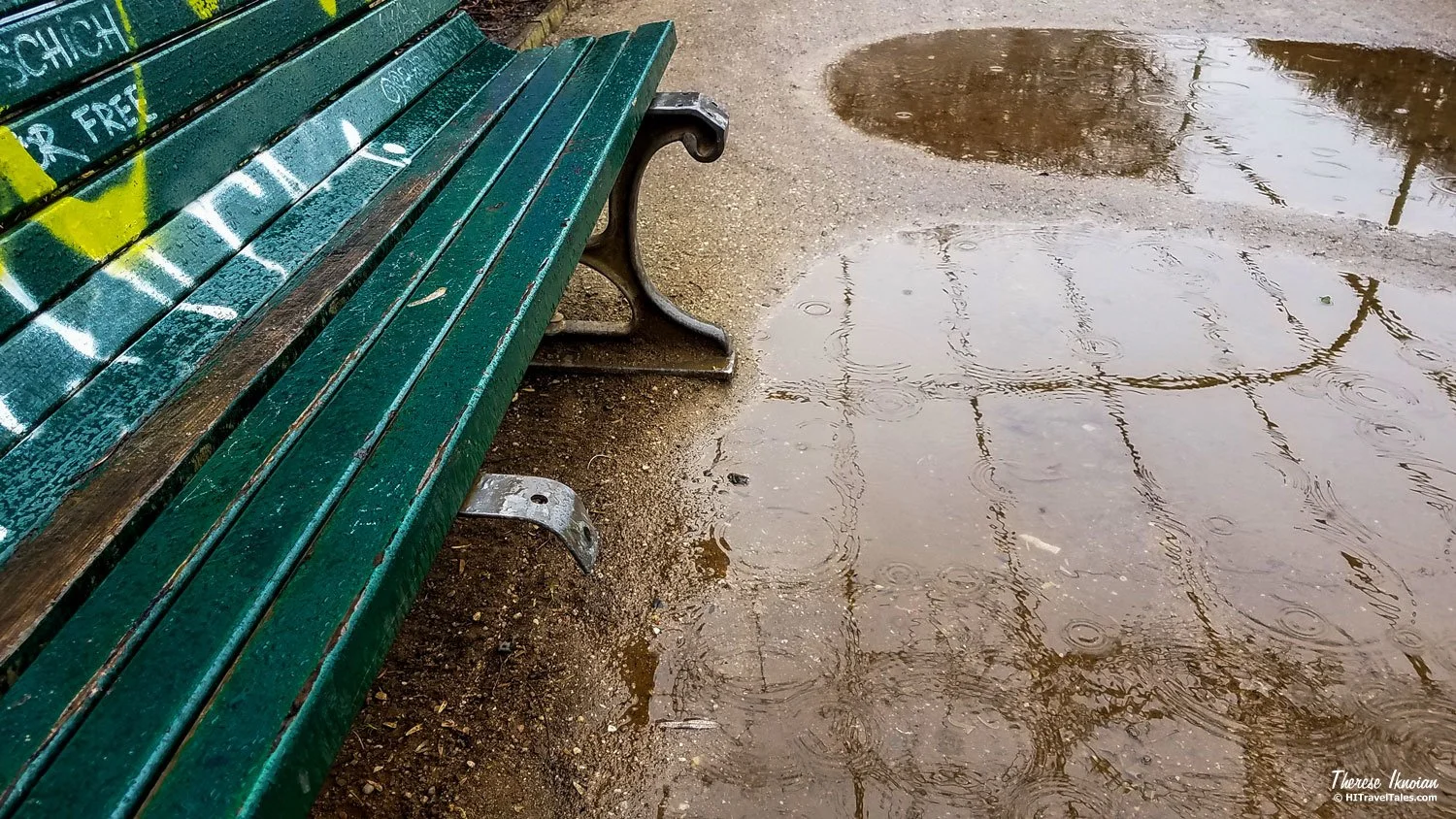
I was visiting Berlin – a town we know pretty well – and I headed out on a run I have done many times. Not more than about a half-mile from where I was staying, I skipped down some stairs, gained a little speed, and was thrilled to hit the little trail I knew well. It was a cloudy, gray day, with rain still threatening, and the dirt path had a puddle across its width, so I calculated that I could place my left foot in front of a bench, then spring from there with my right foot reaching across the puddle.
I did just that, but immediately felt a sharp pain in my left upper calf, so I decided I should stop to see what was going on. Once I rolled up my tights, I was shocked to see a large chunk of skin and underlying fat ripped right back in a V-shape. I stared at it in disbelief, pushed the skin back down into place, pressed the palm of my hand over it, and looked around. What now? I was alone in Berlin at the time.
Medical emergency preparedness: Carry ID and cash
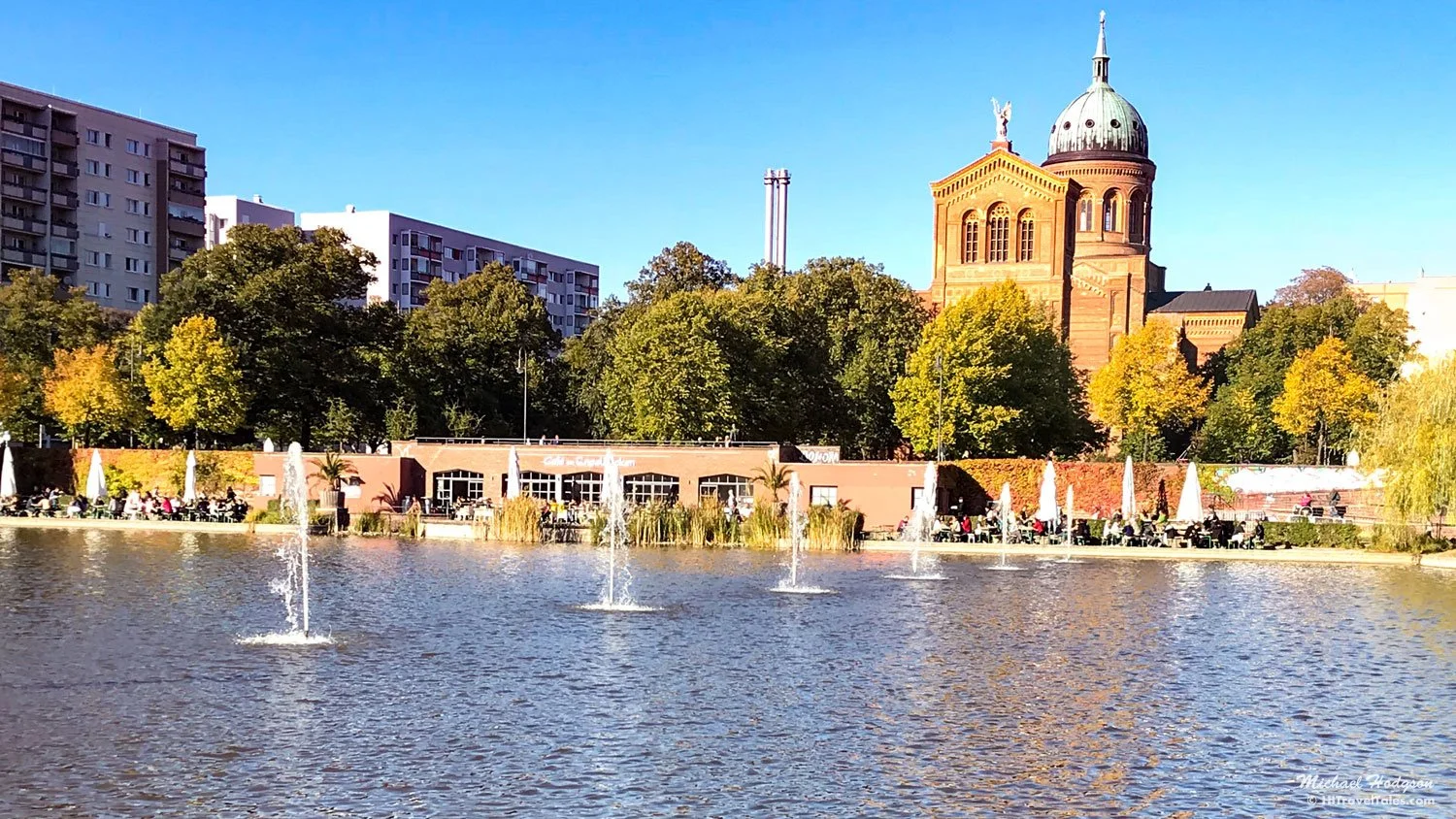
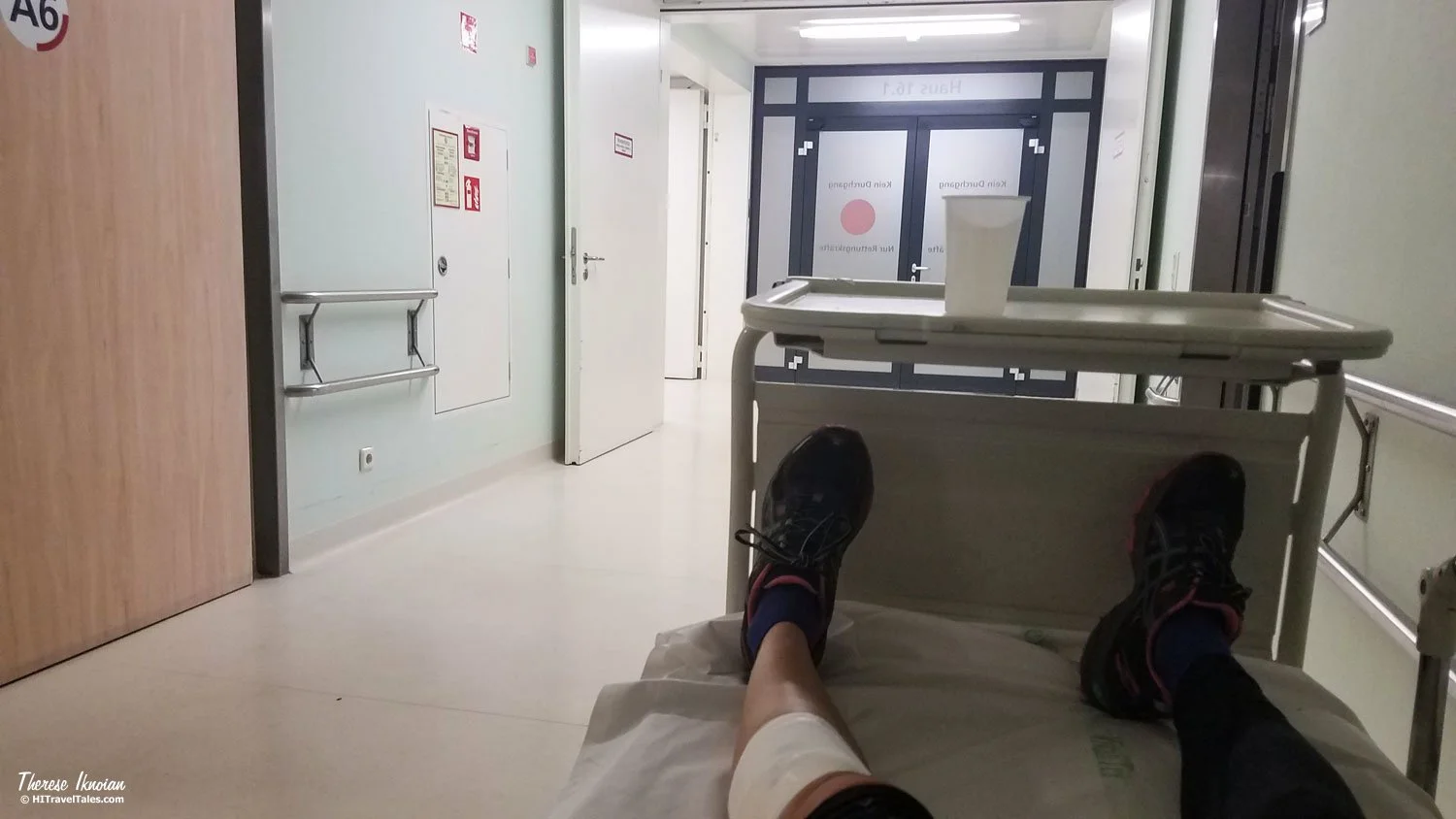
Spying a popular café overlooking the urban pond beside the path, I decided I could make it there. The staff sprang into action, called emergency responders (as they should have) despite my protests, got the wound bandaged, leg elevated, and I waited. Suddenly, I realized I had nothing on me except my smartphone and key. Now what? The hospital would likely ask for ID, and I would need insurance information and then cash to pay for a taxi home!
HITT TIP #1: Even if just a walk around the corner or a “short” run or hike, always have on you an ID of some sort, an insurance card, some cash, and perhaps a credit card – this is traveling advice you just cannot ignore, as I learned at my destination. Small waterproof bags can help protect these items. We recommend either Loksak or this waterproof wallet from Nite Ize.
In this case, the manager at Café am Engelbecken just handed me 30 Euro (a little more than USD $30) from his wallet. I was stunned. Side note: “Engelbecken” translates into English as “Angel’s Pond,” and these folks were my angels!
Know your travel insurance details
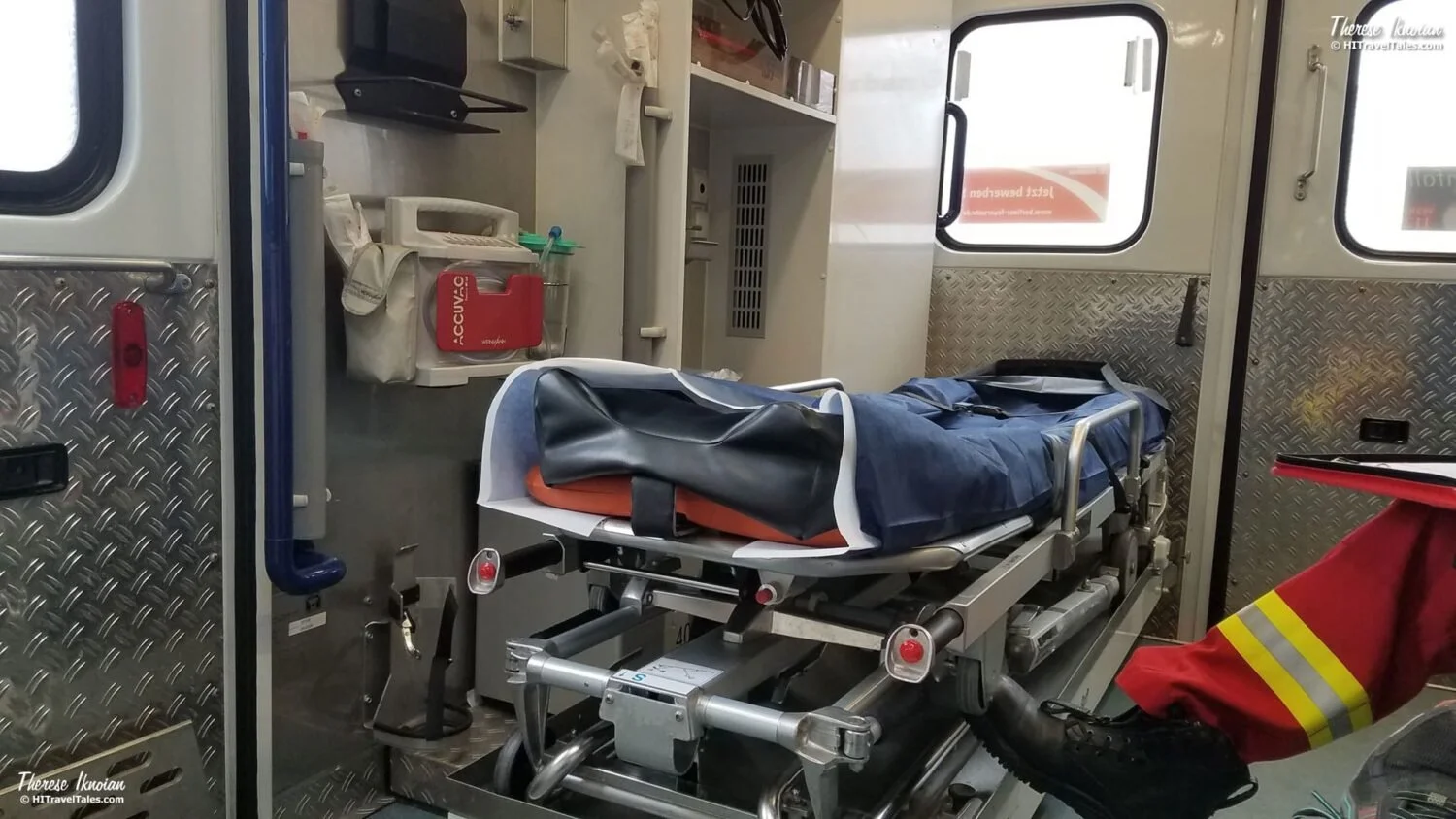
The emergency personnel loaded me into the ambulance, and off we went. In my slightly discombobulated state, I was trying to remember what insurance we had that would cover my fateful medical emergency while traveling. And I was just drawing a blank. I tried to reach my husband and HI Travel Tales business partner, Michael (it was the middle of the night in California!), to help me think through this. Once he realized the incessantly ringing phone likely was important, we sorted through it all together, and he emailed and messaged me copies of cards, contact numbers, and other information. As I sat on the gurney in the ER waiting for my turn, I was on my phone typing and calling nonstop.
HITT Tip #2: Know precisely what your regular health insurance covers if you are traveling internationally and want to be sure any medical emergency travel assistance is covered. If your medical insurance does not cover medical emergencies while traveling internationally, do get an add-on or another travel insurance policy with sufficient medical coverage. We have separate international medical insurance. We'd also recommend purchasing accident insurance, which will cover any out-of-pocket medical expenses for accidents anywhere in the world.
HITT TIP #3: Some credit cards may also cover some medical emergencies while traveling, but only if you used that card to book your trip. Be sure to verify exactly what travel emergency medical coverage you have prior to your departure – and then carry that card.
Be a smart traveler, check the travel insurance network
Of course, in my state, I had not thought to check which hospitals are in-network, so I was now at one that was not. I got on the phone with our insurance to figure it out. At the time, representatives were wonderfully patient and helpful as I fumbled to figure out which name, email, or address our insurance was registered under and what the ID number was. Once that was sorted out, they told me not to worry, they would contact the hospital, send me a letter called a “guarantee of payment” I could show them as needed, and they would take care of it all.
HITT Tip #4: When you are on the road, travel smart with a little preparation. Look up the preferred network providers in the areas where you will be so you know where to turn for any medical emergencies while traveling. Put them in a document accessible on your smartphone, even if you are offline (No smartphone? Then print and carry the paper!). Also, be sure to have an insurance card and ID number accessible, even if you are offline, and put the insurance company phone numbers in your contacts so you can reach it with a push of the button – mark it as a “favorite” so it’s at the top of a list.
HITT Tip #5: Create a contact with emergency “911” type numbers in any country you are going to be in, as I did a couple of years ago, and have a list with the likes of 155 for Slovenia and 19 for Morocco. Star or otherwise mark so it’s at the top of your lists.
How to be prepared for travel emergencies - think vaccinations
But, wait, there’s more: What about any vaccinations you may be asked about, other medical history, or even your blood type? In my case, since I had run straight into a gray metal support post sticking out from the front of the bench where a couple of bench slats were missing (and it just sliced me open), I was asked about tetanus. I had actually just updated my medical record prior to departure with some new immunization information and scanned it into our cloud storage. But, guess what? Without my reading glasses, I was struggling with everything on my phone!
HITT Tip #6: Be sure to also have your medical history accessible on your smartphone when you are offline, or carry a paper copy if necessary. In a medical emergency while traveling, your brain may not kick in, as mine didn’t.
HITT Tip #7: Carry any reading or prescription glasses with you, even small emergency ones. I often carry a tiny thin pair from ThinOptics but had left them out of my waist pack for some reason for this “quick” run. Luckily, my husband was able to read the form and find the date of my last tetanus shot, which I had missed with my impaired vision.
Communicating during medical emergencies while traveling
Another lucky stroke for me was that I speak German fluently. Sure, I was thrust into a language area where I didn’t know some of the terminology, but I could work around that. Even Blue Cross Blue Shield Global Solutions sent the forms I needed (within minutes of my call, I may add!) in German so I could show them or pass them on to those who needed them.
HITT Tip #8: If you don’t speak the language, have a translation app handy in case you are in a country where medical providers may not necessarily speak English. If an app doesn’t work for you, then carry some printed medical terminology or some pages from a phrasebook.
Consider emergency evacuation insurance
I did not need an evacuation, thankfully, but we also have emergency evacuation insurance with Global Rescue. The need for this can be so sudden and unexpected (that’s why they are called “accidents,” right?) that it’s always a good idea at foreign destinations. We actually witnessed a horrific cycling accident on a group trip we were on in Croatia a few years ago, where the woman nearly died, and her husband was struggling to communicate with hospital staff and to get her home. They did not have international insurance.
HITT Tip #9: Consider emergency evacuation insurance. We pay for Global Rescue evacuation coverage – although thankfully, we have not had to use it yet!
Good travel medical insurance makes a difference
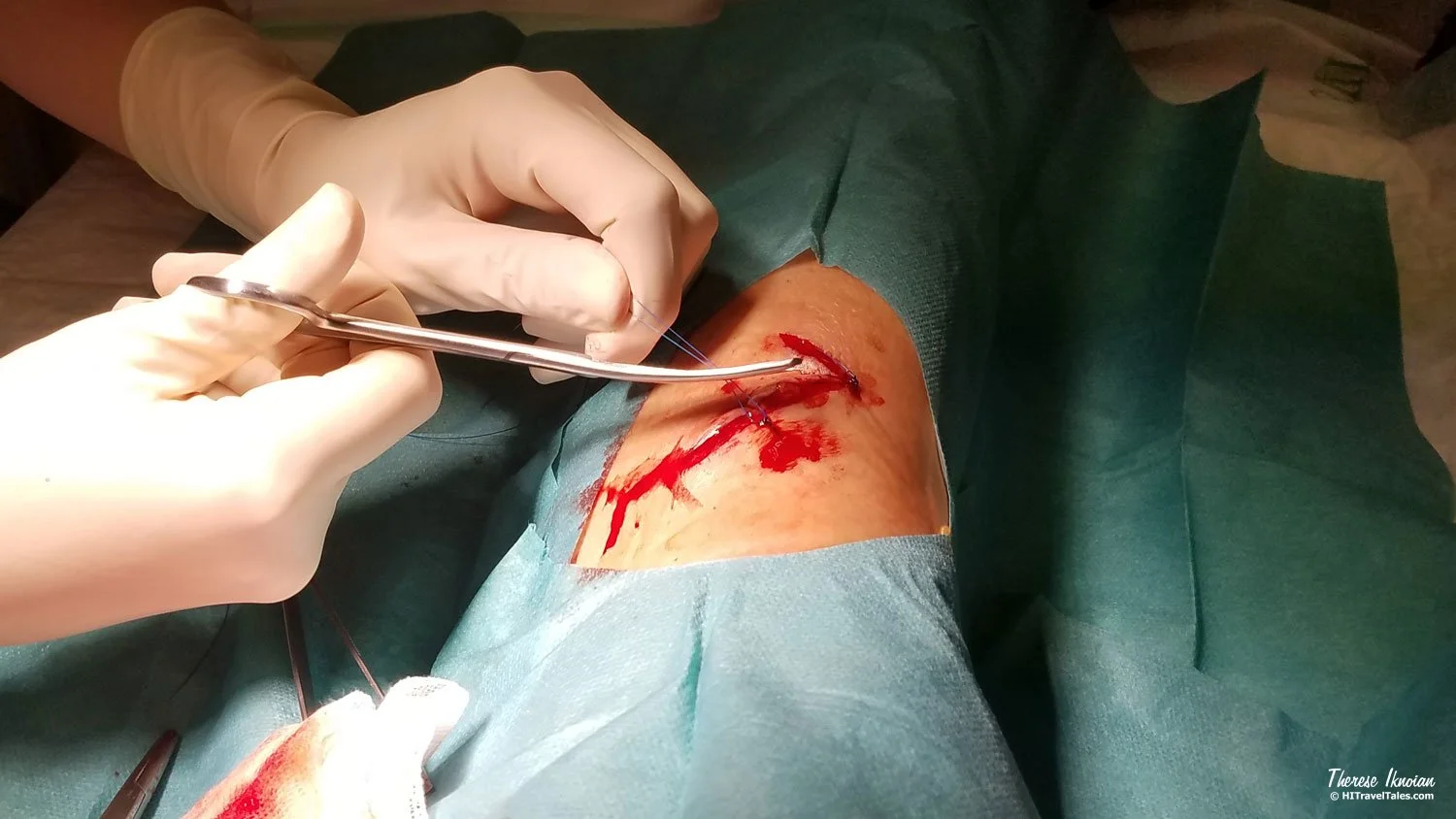
Of course, after being bandaged and sutured, I was told I’d need to see a doctor the next day to check on the wound, for follow-up care, and to have the stitches taken out in about 10 days. Doctor? What doctor? Now, however, I was better mentally prepared to find medical emergency travel assistance. Back with my computer and with my wounded leg elevated, I could go directly to the Blue Cross Blue Shield Global Solutions website and find in-network providers. A doctor not more than a half-mile away was in the network, making it very easy to go in the next day and not worry about a thing. Nevertheless, after I had arranged it, I called BCBS Global Solutions, and they sent another letter of “guarantee of payment,” again in German, both to the doctor and to me. I was never so grateful for the response – It helped me feel as if I truly had a support team, although I was alone!
You're now prepared for travel emergencies while traveling
I did end up with a slight infection, got antibiotics and stronger pain medications from the doctor a few days later. I also went back to Café am Engelbecken the day after the accident to express my extreme thanks and to pay back the 30 Euros I had been given without a thought. Since I was heading off to Morocco a week later, I also added all the Moroccan emergency numbers to my phone list and followed all the lessons I learned to be prepared for any medical emergencies while traveling in what were to be perhaps more remote areas.