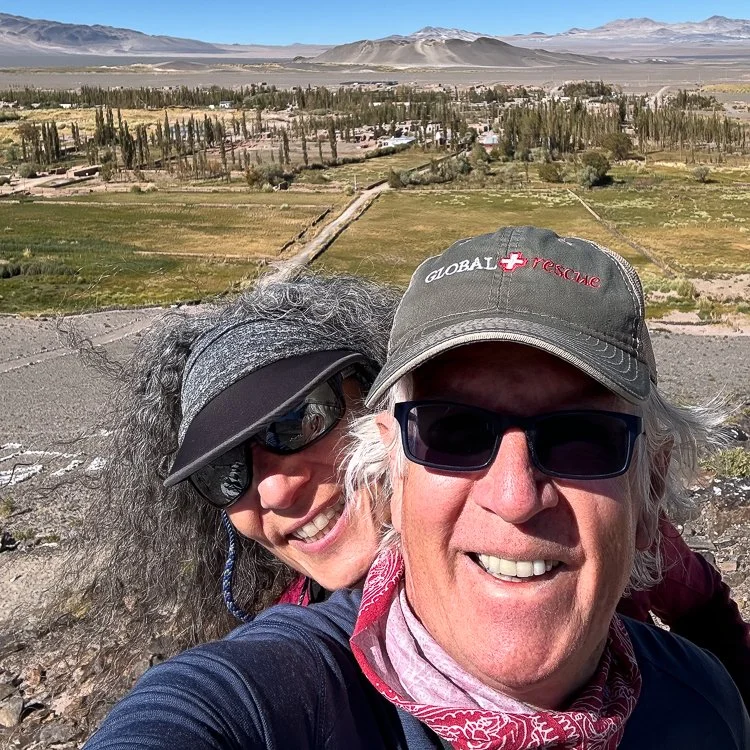
Big Bend National Park: Chasing stars, wildlife and desert light
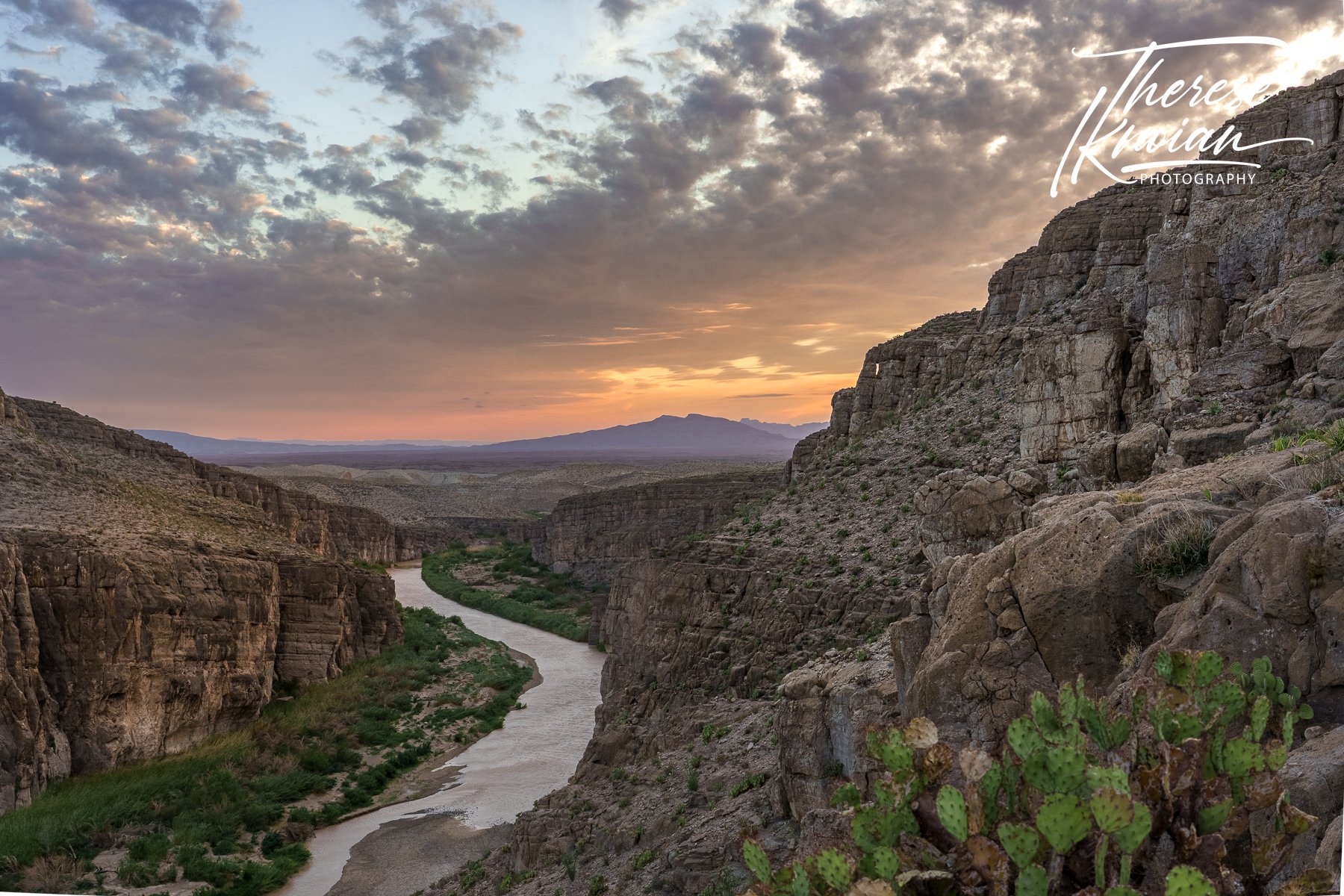
From the dark skies of Big Bend National Park to the wildlife, desert landscapes, and offbeat charm of Terlingua, our West Texas photography adventure delivered unforgettable moments plus long drives and unpredictable weather.
Big Bend National Park is not a place you simply stumble upon. Tucked against the Rio Grande along the Texas–Mexico border, it lies hundreds of miles from almost anywhere—and getting there requires commitment.
We were more than willing to make that commitment, with the promise of photographing Big Bend’s legendary night skies, elusive wildlife, and desert light.
The scale alone is daunting. Big Bend National Park sprawls across more than 801,000 acres. Brewster County, where the park is located, has fewer than 9,500 residents across its 4 million acres. The park, meanwhile, supports more than 450 bird species, 75 mammal species, and nearly 1,300 plant species. Out here, the wildlife and desert flora easily command more attention than the people.
Reaching this remote corner of Texas feels less like a drive than an expedition. Highways stretch toward the horizon, and mountains rise through the heat like a mirage. The light shifts by the minute, and after sunset, the darkness reveals a sky that seems far too large to fit into a photograph—which, of course, only made us more determined to try.
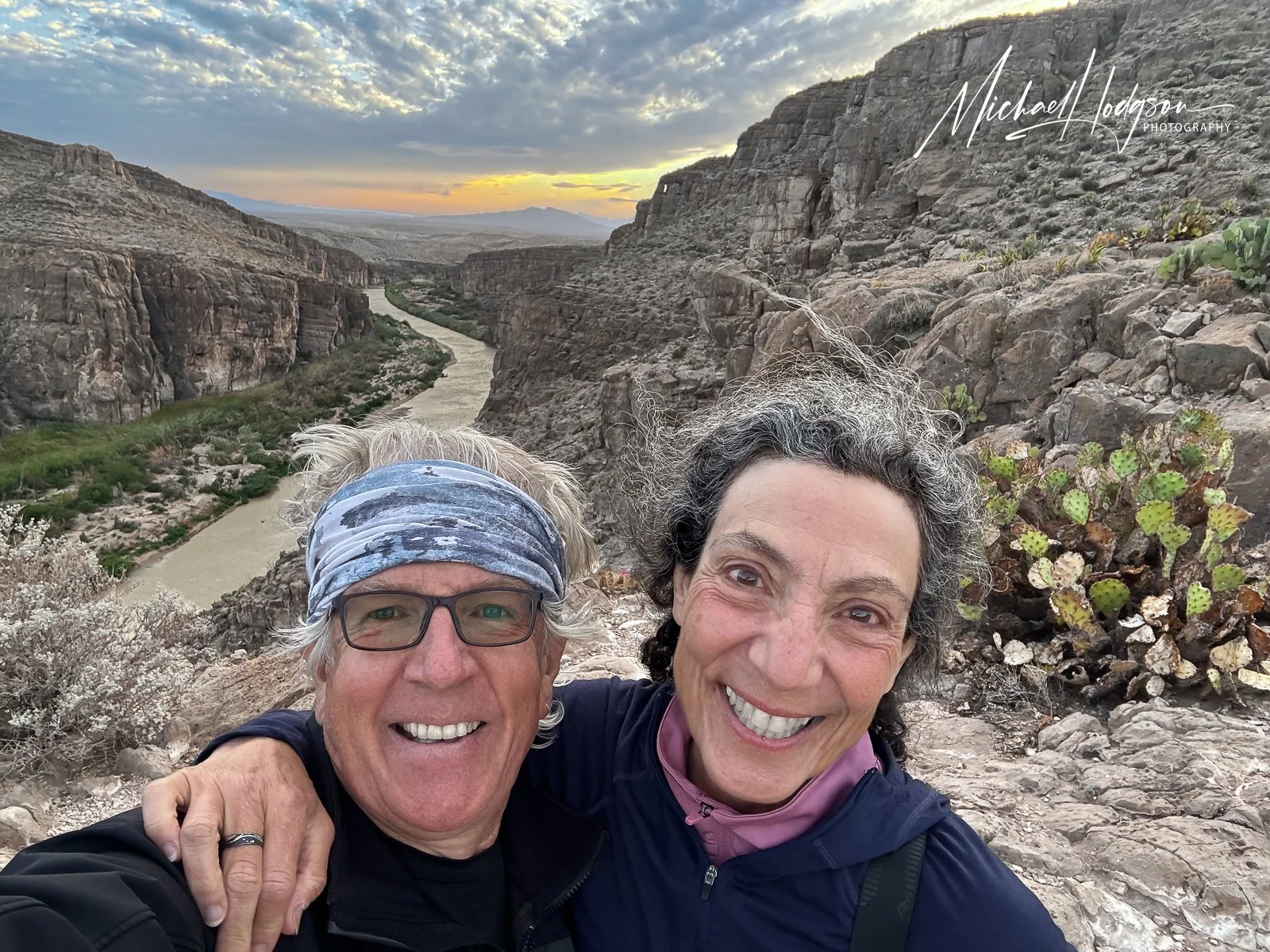
Setting out with big plans
With high hopes, we set out for Big Bend National Park and the surrounding desert region, loaded down with cameras, tripods, long lenses, wide lenses, headlamps, fleeces and raincoats, snacks, and a certain naivete that we would find a way to photograph both the park’s famous dark skies late into the night and its coveted wildlife at first light the next morning.
The plan was simple enough on paper: Chase stars (Therese’s thing). Chase birds and animals (Michael’s thing). Chase desert light all the time. Sleep? We’d figure that out later.
The desert laughed.
After flying into Midland, we drove toward Marathon as dusk fell over West Texas. Along the way, elk appeared near the road, ghostlike in the fading light, a quiet reminder that wildlife photography rarely waits for you to be ready. Therese studied maps and apps to scout photo opportunities for that night in a place we didn’t know. As night fell, we reached our abode at the Gage Hotel in Marathon, hungry and tired, and scampered off just before closing for takeout from Ghostfire Pizza (p.s., not to be missed!). We devoured delicious pizzas, boxes perched on our laps as we sat in chairs outside our hotel room.
After a long day of travel, most people might have called it a day.
Therese called it a photo opportunity. Peering up at the dark sky, stars were starting to pop, calling her name to give chase. Tilting at windmills was the name of the game. Sleep? Overrated.
There is so much to see
This was indeed how our next few days of ambitious plans would go: stay up late, get up early, try to grab naps, drive long distances, chase elusive wildlife, dig around in a Styrofoam cooler for something that resembled a meal, and pray the clouds would clear so a starry, dark-sky photo would be possible. We wanted everything the park could show us.
Big Bend is undoubtedly beautiful; it is also expansive. With its more than 801,000 acres (making it larger than the state of Rhode Island), you can’t just hop from one end to the other or back again quickly. Still, there are so many breathtaking corners, from Santa Elena Canyon and the Rio Grande River’s soaring limestone cliffs to abandoned structures at Castolon and Sam Nail Ranch to mountainous hikes and rock formations in Chisos Basin. You want to get to them all. We did. Of course. You might not want to follow our lead.
Make peace with yourself before you go. Unless you want to spend long hours each day in your vehicle or you have a couple of weeks or more there, you will not get to all the park has to offer. We happened into a stormy phase that brought rain, high winds, lots of clouds and haze, and unforgiving heat. That can happen. But with the park’s size, you will likely find a spot where the weather will cooperate, allowing you to take in some spectacular sights.
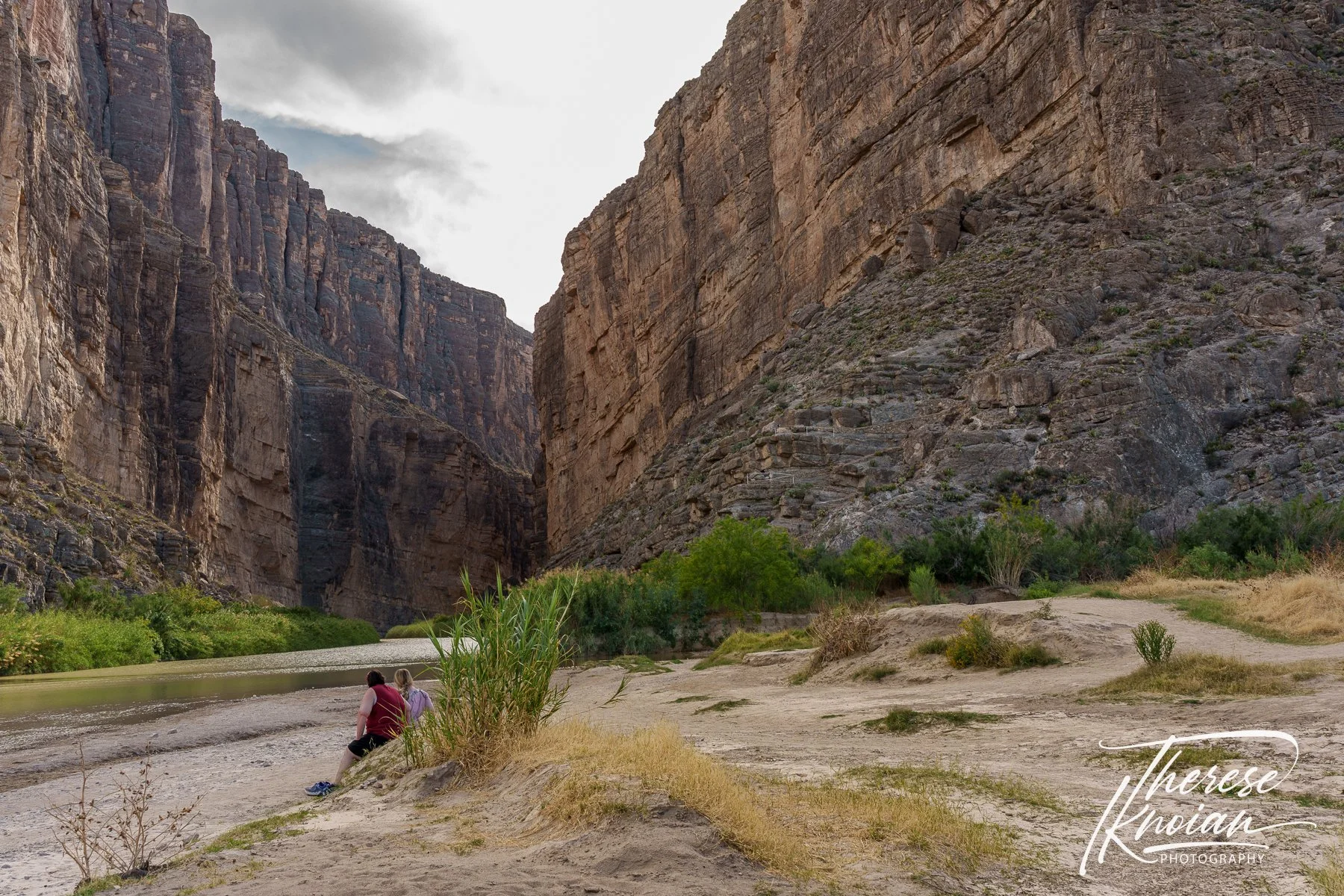
Santa Elena Canyon and the Rio Grande River.
Terlingua: a state of mind
Our first landing was in the town of Terlingua. It’s called a ghost town, but it’s probably best dubbed a living ghost town. It’s just outside the park boundaries, and most everybody will likely end up there at some point, in part because it’s nearly the only place with restaurants and stores. So let’s talk about Terlingua.
There are places where you stay because they are convenient, and there are places where the stay becomes part of the story. Terlingua is the second kind. As a living ghost town, there are ruins smattered across the hills. In between and nuzzled up to them are shacks, sheds, and food trucks offering whatever a visitor might want. Some of the buildings are, in fact, primped ruins.
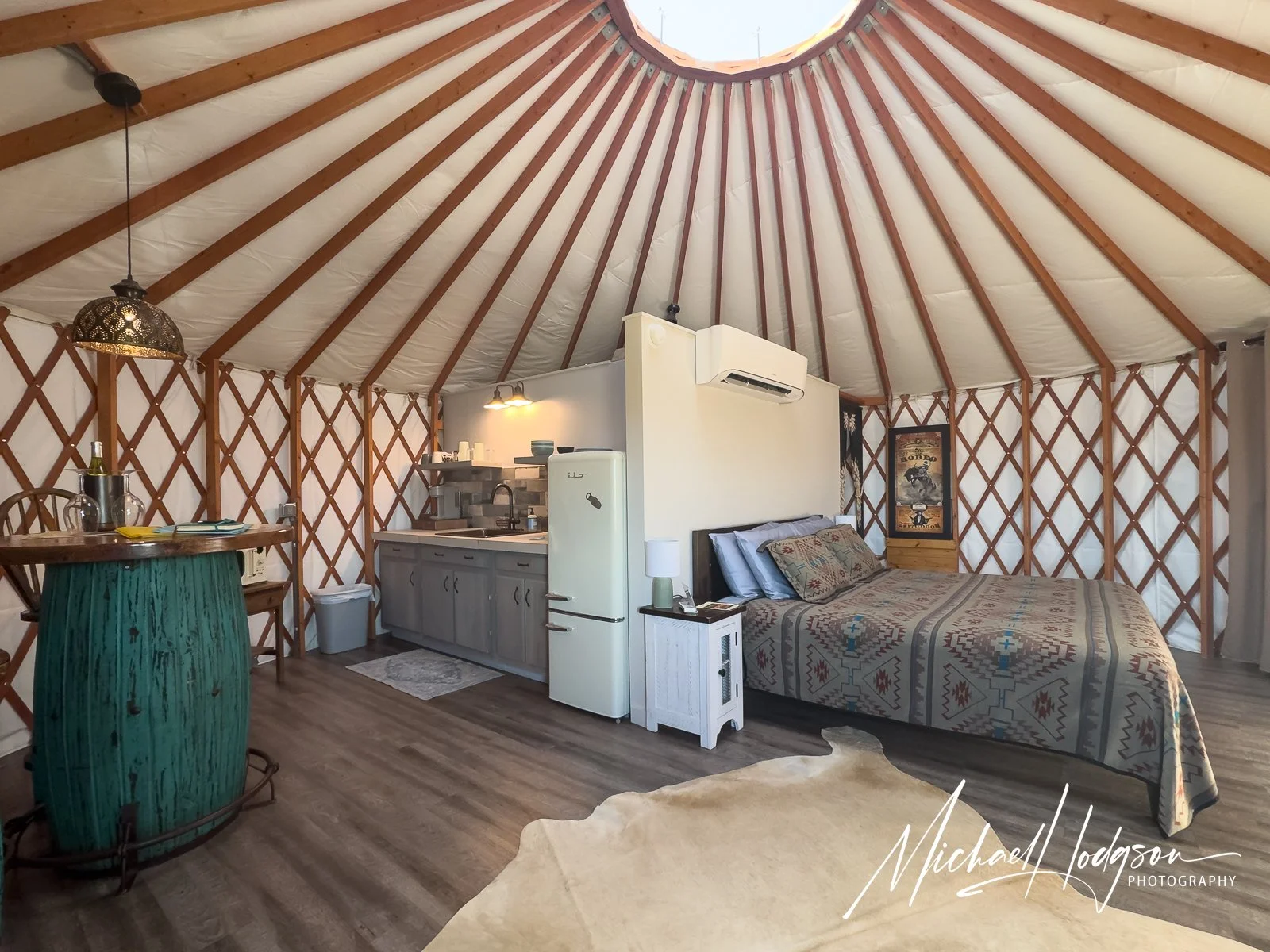
We checked into the Terlingua Escondido Yurt, just across the street from the new (ish) Venga Café, which is probably the schmanciest thing in town, part event center, part restaurant, and part coffee house. Calling our Escondido abode a “yurt” does not quite capture the experience. It was a desert hideaway that blended the eccentricity and charm of Terlingua lodging while offering an amazing glamping experience. It was also a reminder that Terlingua is not truly interested in being defined merely as a living ghost town on the edge of Big Bend National Park.
Terlingua is far more: It is a mood, a texture, a state of mind. It has ruins and porches, dogs and dust, tourists and desert lifers, margaritas and ghost-town romance. It is scruffy in the best sense of the word. You do not go there for perfection. You go there because perfection would ruin it. And that in part applies to cuisine. You eat to survive, and you eat where it’s open. Fine cuisine is not the main reason people travel to Terlingua, so come with a backseat full of food and snacks.
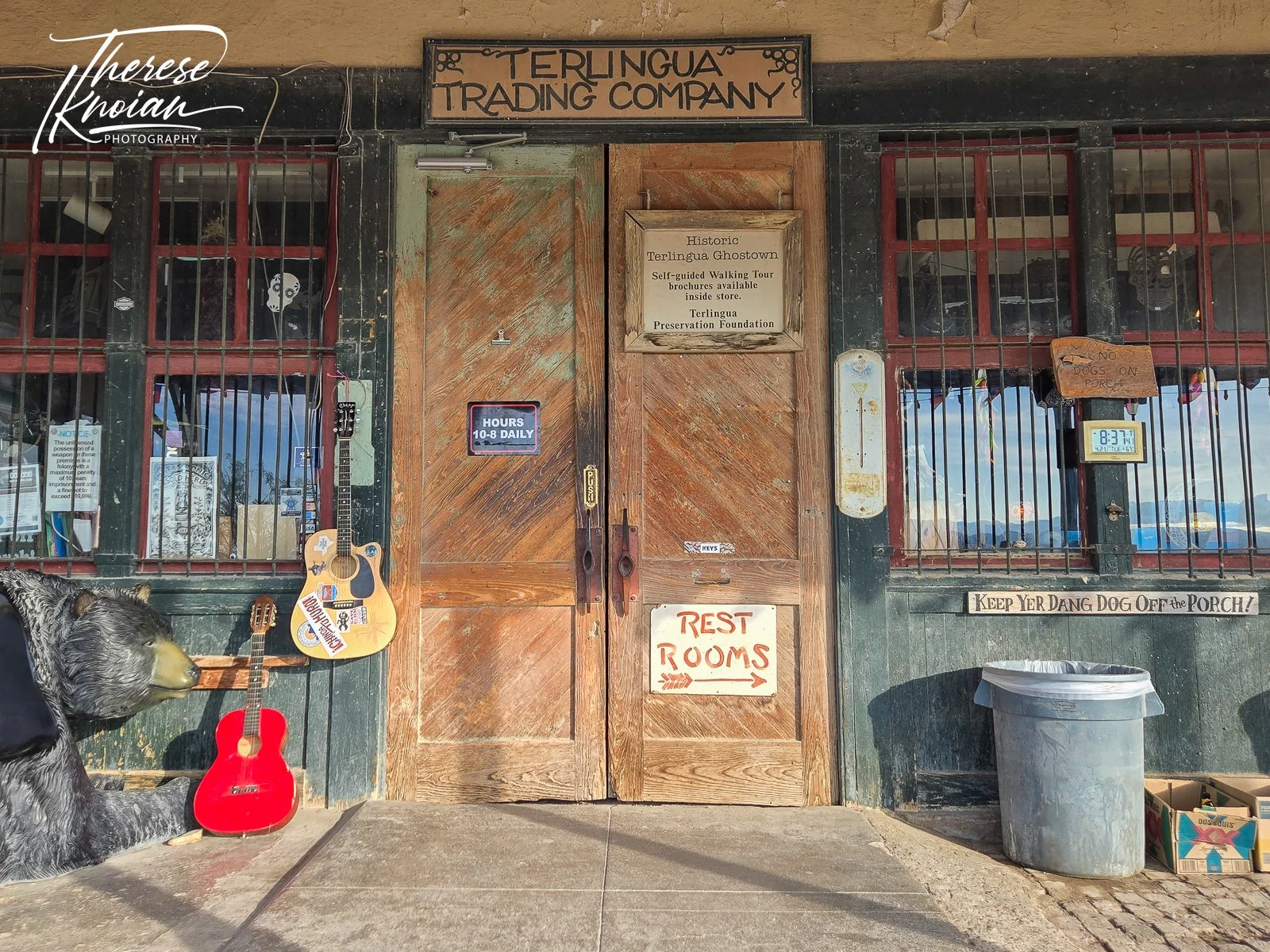
Terlingua, albeit not officially part of Big Bend National Park, has a few sights of its own. The cemetery is one of the main attractions, and you could wander there for hours. Take in the Starlight Theater, now a restaurant, or the Terlingua Trading Company next door, with all manner of souvenirs, Western kitsch, and one-of-a-kind finds (for city slickers). Or just gander on the side streets or up a hill, no holds barred. Remember, though, that Terlingua runs on “Terlingua time.”
Dark skies worth the chase
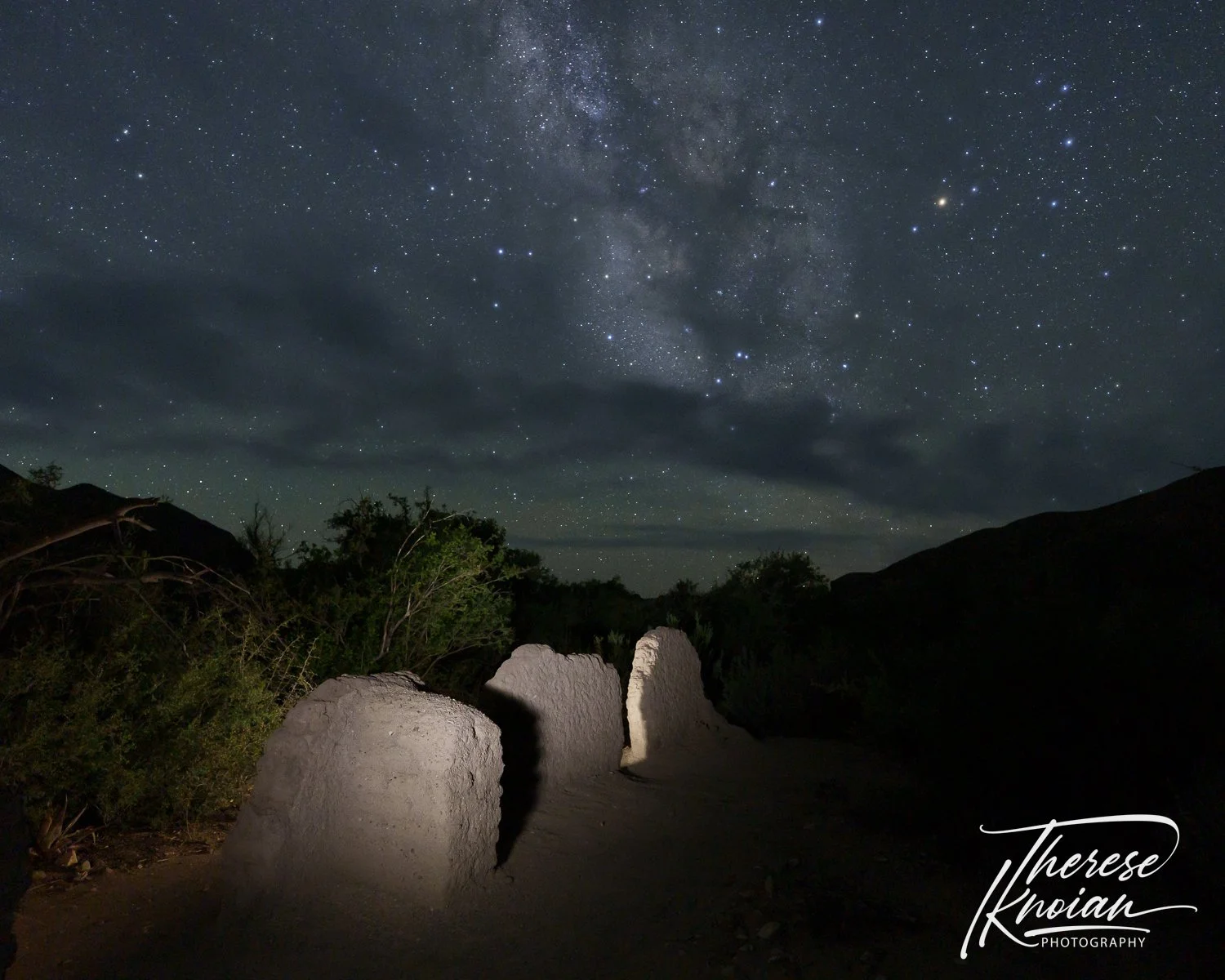
As a Gold Tier International Dark Sky Park (a title reserved only for the darkest places), Big Bend is famous for its night skies -- and for good reason. When conditions cooperate, the stars feel close enough to snag on the spines of an ocotillo, dotting a sky as dark as coal. But conditions are everything. Clouds, wind, haze, moonlight, and timing can turn a carefully planned night shoot into an exercise in stubbornness and cock-eyed optimism.
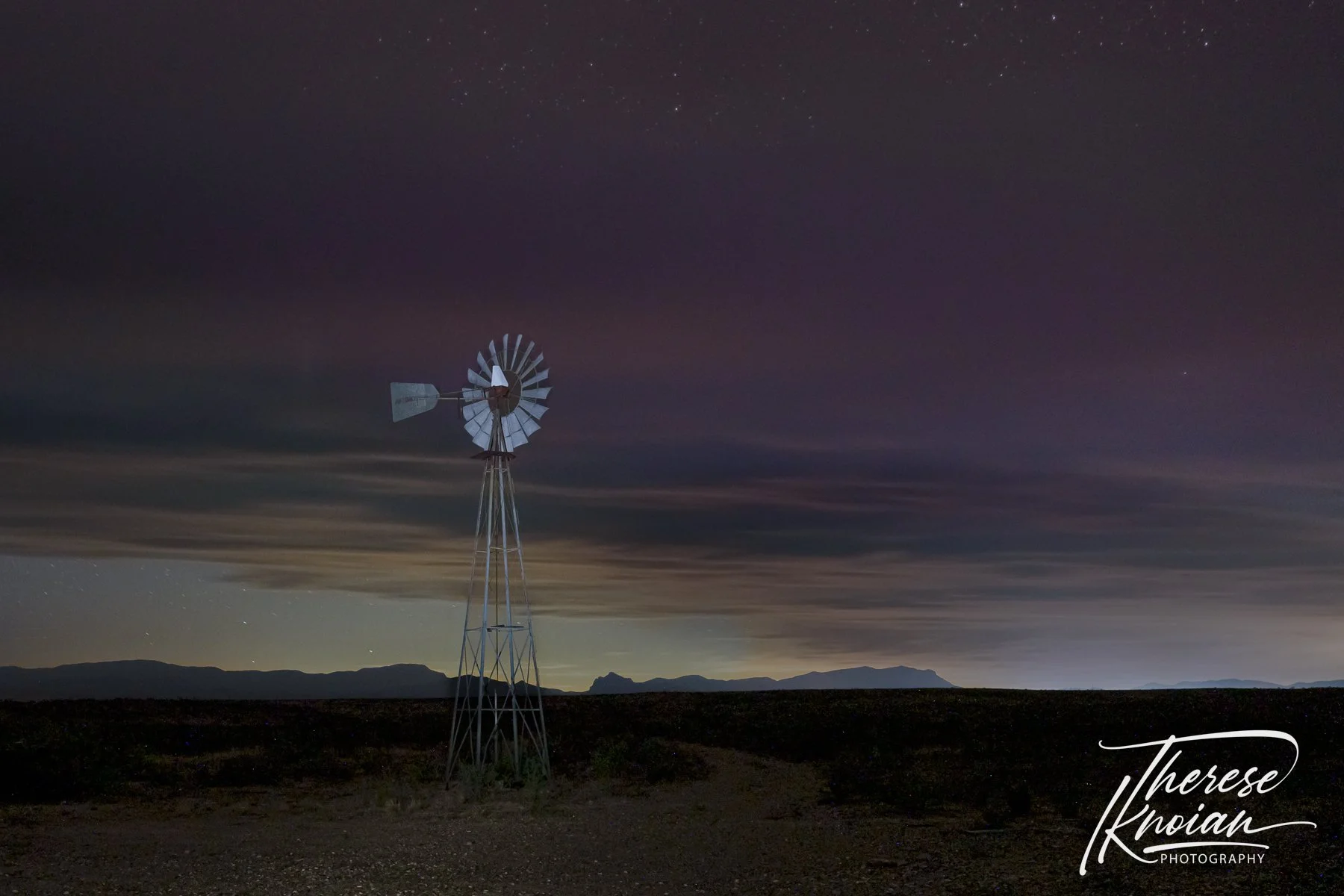
We shoved ourselves out of bed in the middle of our first night there (think 3 a.m.) because we saw a storm moving in for the rest of the week. This could be our only chance for stars. We headed to Sam Nail Ranch, which has a windmill, a few adobe ruins, and a nature trail. Despite dancing around a black widow that had spun her web inconveniently near where Therese wanted to set lights, she managed to work her night magic to conjure a light-painted image of ruins and a still-operating windmill. Clouds were already drifting in, though, and that would be the story of our star-seeking week … until our last night.
Not that Therese didn’t remain ever hopeful: While Michael was seeking wildlife, she set up two cameras on the Rio Grande Nature Trail, fingers and toes crossed – and then clouds rolled in. In all fairness, the sunset was quite beautiful and can be enjoyed from a bluff there, just a short jaunt from the campground. A keeper on any Big Bend program.
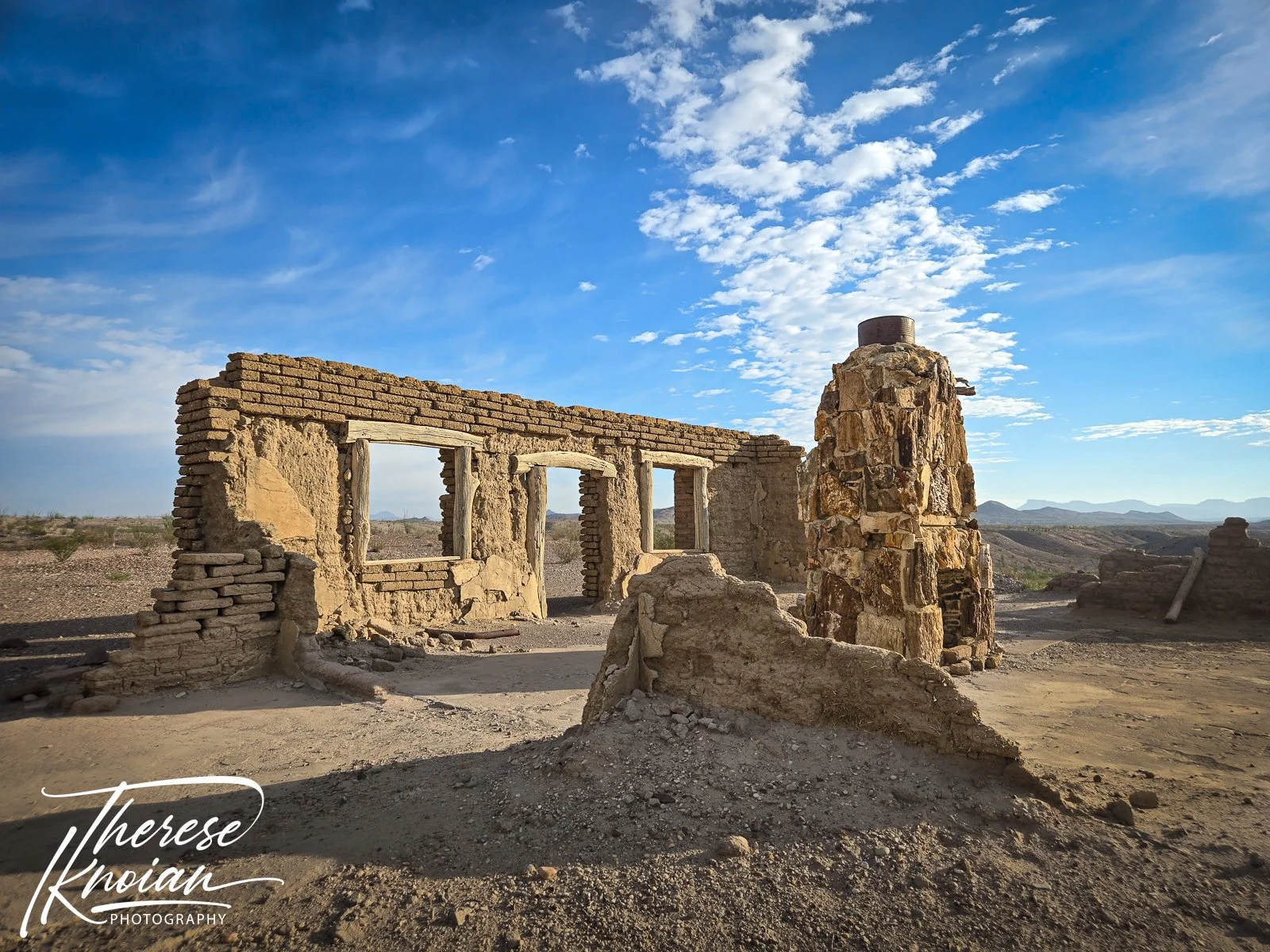
Finally, on our last night, Therese was beside herself with excitement with the forecast for clear skies, but with the great expanses and an early flight heading home the next morning, she knew she had to select just one location that could give us what we wanted. She chose the abandoned Dorgan-Sublett ruins, on a bluff overlooking the Rio Grande with a 360-degree view. If the clouds moved in on one side, dang it, she would just shoot in the other direction.
The Dorgan-Sublett trail is often missed by visitors. Granted, it is a half mile to the ruined farmhouses, but well worth the journey. It was fascinating to read on the signage that the Dorgan-Subletts were the first to introduce mechanized farming there, installing the area’s first irrigation system and, by 1918, cultivating 2,560 acres in the Rio Grande floodplain, growing sorghum, corn, alfalfa, and other livestock feed crops.
Day or night, get a look at the abandoned ruins … and the view.
Seeking elusive wildlife, feathered or furred
Wildlife is also one of Big Bend National Park’s great attractions, but seeing -- and especially photographing it -- takes planning and luck. The park is home to black bears, javelinas, mule deer, coyotes, mountain lions and the famed Colima warbler. Photography success means being in position during the cooler hours around dawn and dusk. Unfortunately, despite all the planning and hope that Michael would find the famed bird, the day we chose to head into the Chisos turned out to be extremely windy and cold. There would be no photo on this day when we could barely stand up.
On the flip side, assuming everything goes according to plan, a wildlife photographer must still be ready -- and fast. While Therese was scouting a night-sky composition, Michael spotted his first greater roadrunner in beautiful light and promptly missed the shot while maneuvering into a better position. The bird did exactly what its name promised: It ran. By the time the camera came up, the frame contained only the space where a roadrunner had been.
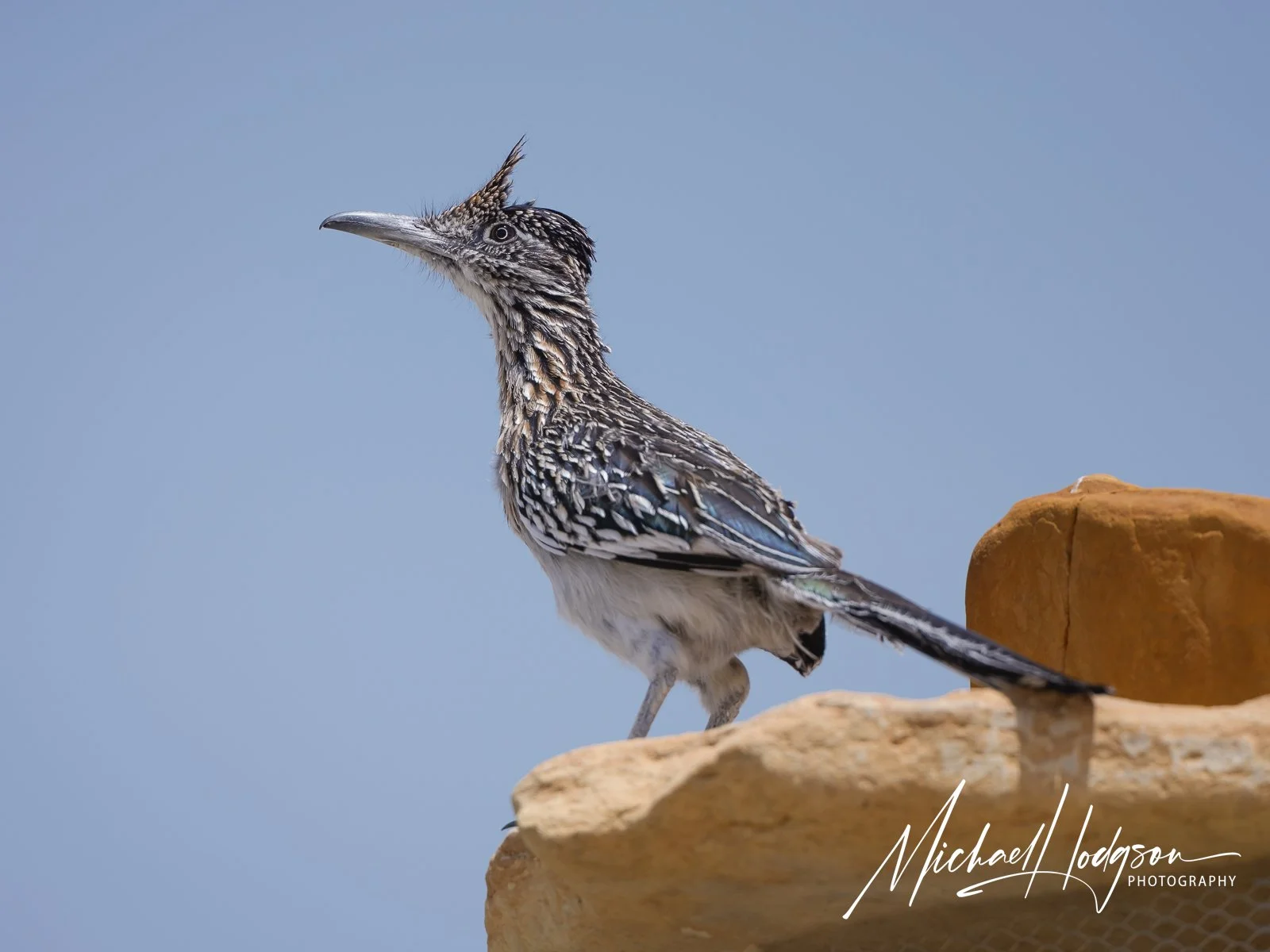
Sometimes, though, you are gifted with wildlife when and where you least expect it. One day we surrendered to a slower morning and headed to Espresso y Poco Mas for brunch (really, the best place in town for just about anything, not to mention much-needed espresso). And Terlingua rewarded us with one of those small, ridiculous gifts travel sometimes delivers: a roadrunner on the roof. Michael was not going to miss this photo. The bird stood above us as if it owned the place, which, in fairness, it probably did, since the owners had even named it. It scampered around the tables and grounds, striking poses and attracting a lot of attention.
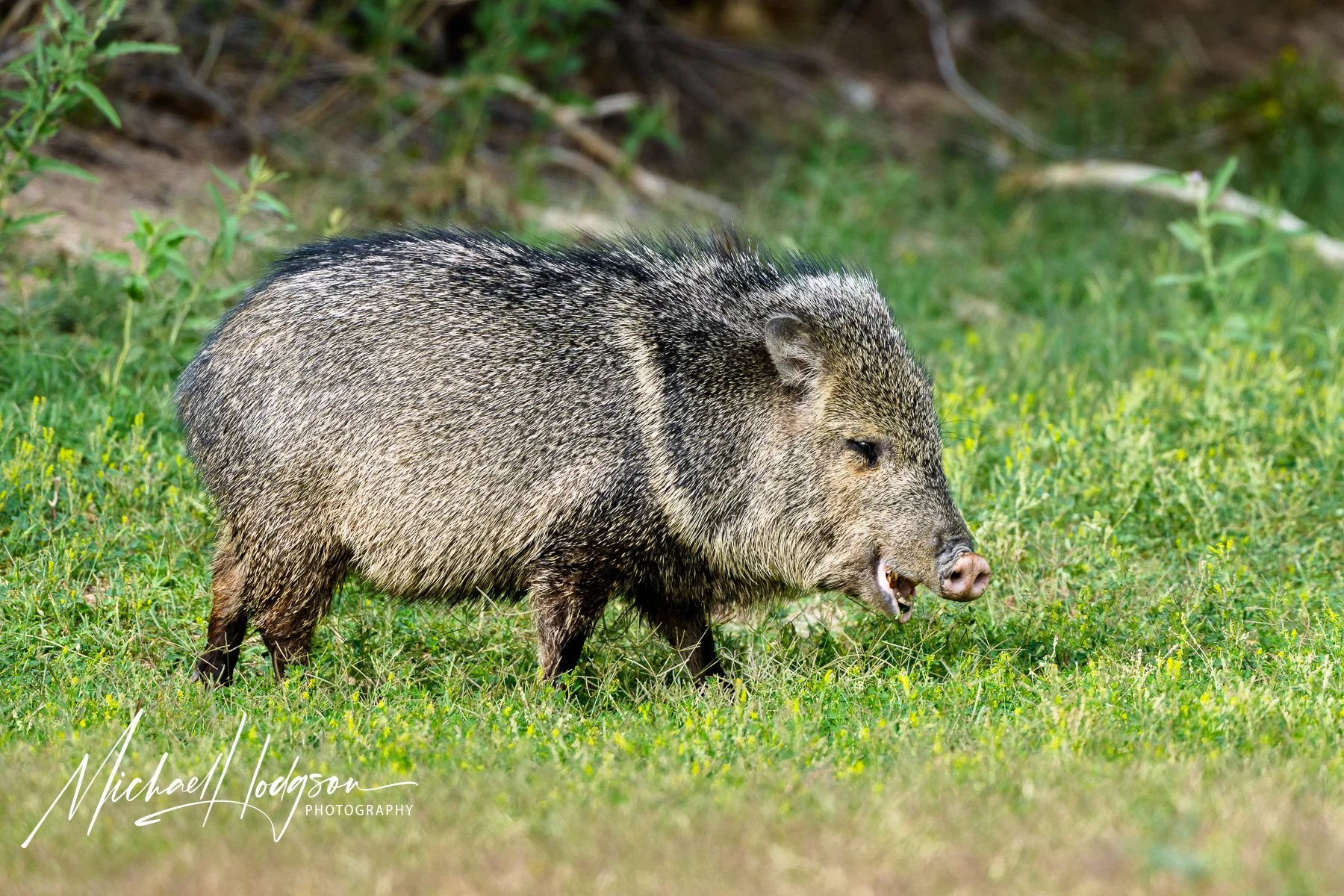
But Michael wanted even more: After a few frustrating attempts to capture keeper shots of wildlife, he headed out before dawn and found a goldmine at Daniels Ranch just 250 feet from the border with Mexico. The bird life was spectacular, and Daniels Ranch finally delivered the kind of activity any wildlife photographer would hope for: movement, sound, possibility – and mosquitoes that rose in waves from the standing shallow water. Therese was glad she slept in. He also returned to the Rio Grande Nature Trail – a beautiful trail that threads through marshlands and desert topography toward the river from the Rio Grande Village Campground. Our previous visit had yielded few photo opportunities. This time Michael spotted a javelina in the distance, which he was able to get close enough to for some fun photos.
More to Big Bend to explore
After our first few days hunting the night skies, exploring desert landscapes, and spotting birds, we moved from the Terlingua Escondido Yurt to the historic Perry Mansion to experience another side of Terlingua. The grand 1906 building on the hill overlooking town was transformed from ruins into a hotel and opened in late 2018. If the yurt had given us Terlingua’s offbeat desert solitude, the Perry Mansion gave us an intimate connection to Terlingua, a stay wrapped in old walls, history, and the slightly haunted charm of a town that knows how to hold onto its past without sanding down the edges.
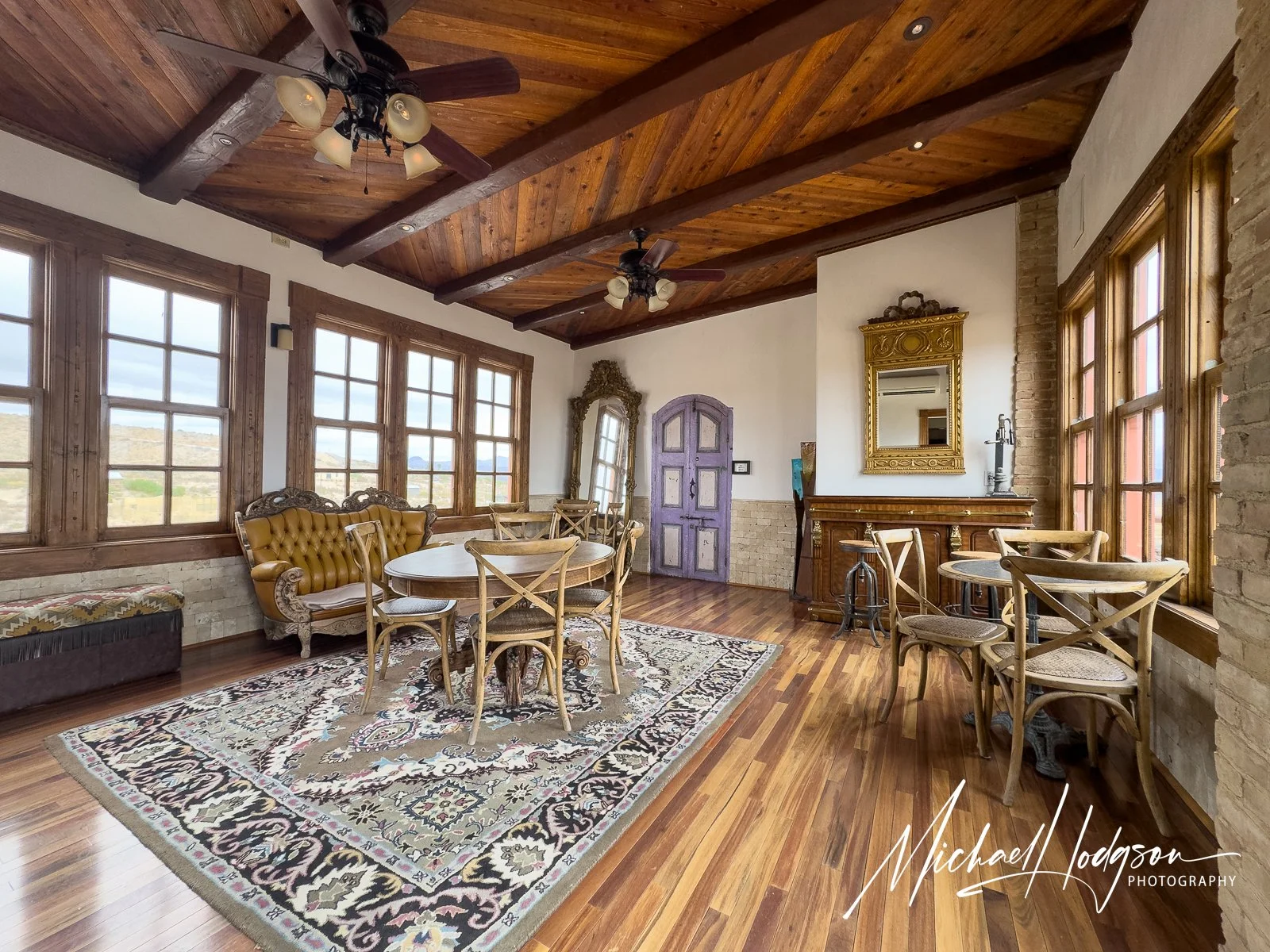
The upstairs living room in the Perry Mansion.
There are several suites upstairs, as well as regular rooms squirreled away here and there, plus a very well-appointed common kitchen, a great upstairs patio, and a living room. You can truly feel the town’s mining history at the Perry Mansion. We highly recommend a takeout lunch from Espresso y Poco Mas to enjoy on the Perry Mansion’s porch. It is one of those simple travel moments that does not sound like much until later: food in hand, cameras nearby, dust on our shoes, the porch quiet around us, with a sweeping view over Terlingua and a backdrop of Big Bend’s hills stretching far and wide.
With so much to see in the area, however, you may end up spending less time enjoying a terrace and more time in the car. You can even jaunt into neighboring Big Bend Ranch State Park, explore nature trails, a stargazing park, and take a walk among sculpted stacks of hoodoo rocks.
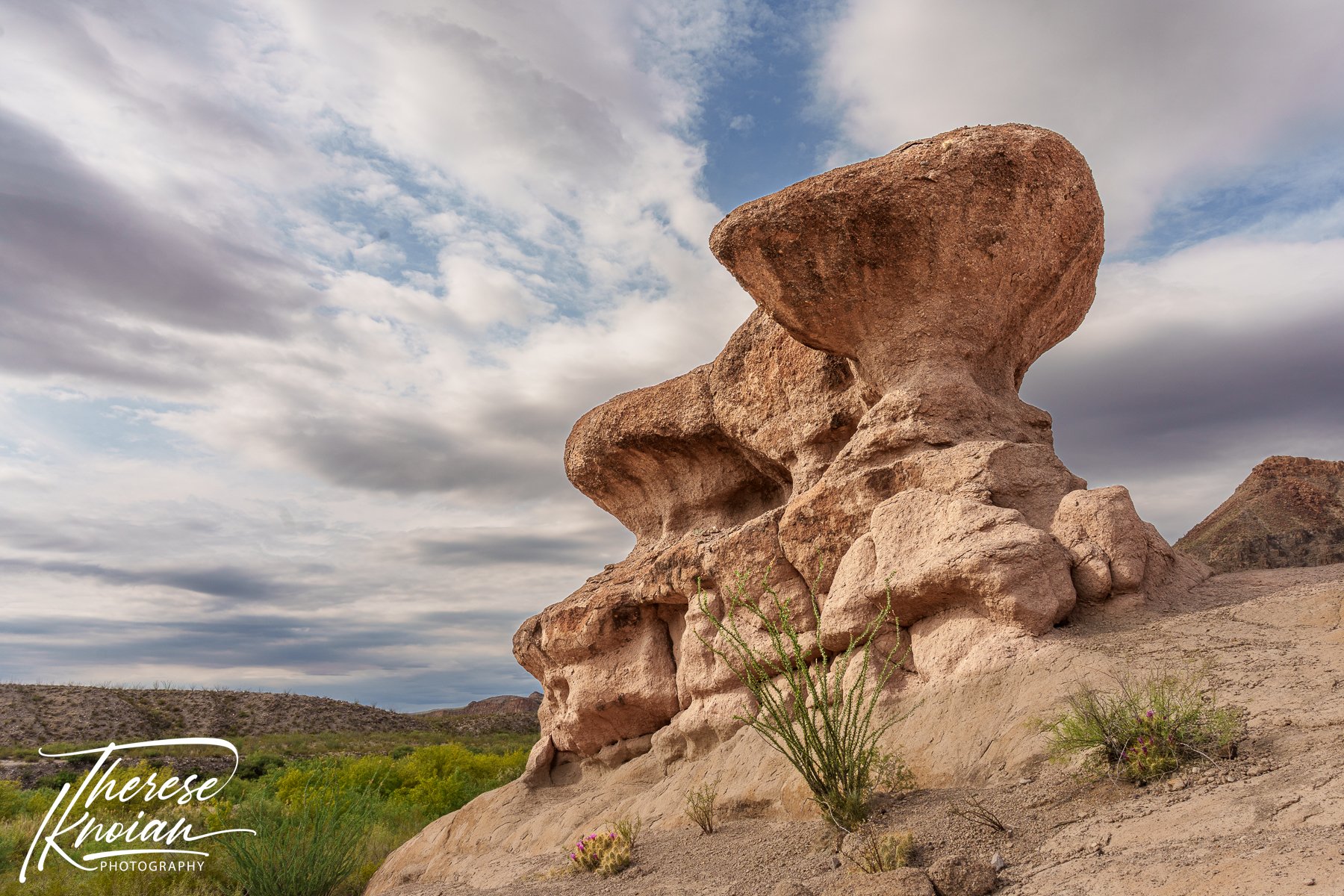
In between wildlife, dark skies, and seeking some sleep to keep going, there are too many sights to sit still.
There is the Santa Elena Canyon Overlook that everybody heads to, and it’s pretty grand indeed. We loved the Ernst Ridge Trail, which ascends to an even grander overlook from Daniels Ranch. Go at sunset – or earlier if it’s not summer – and take in the golden orb sinking below the Rio Grande River cliffs.
From a few points along the Rio Grande, you may spot Mexican cowboys. We were surprised to see a few riding along the U.S. side of the river, looking for a lost cow (which knows no borders), a scene so cinematic it felt almost staged. Except it was not, and that is one of the pleasures of Big Bend. The border here is not an abstraction on a map. It is a river, a landscape, a working place, and a shared desert world where daily life continues in ways visitors only glimpse.
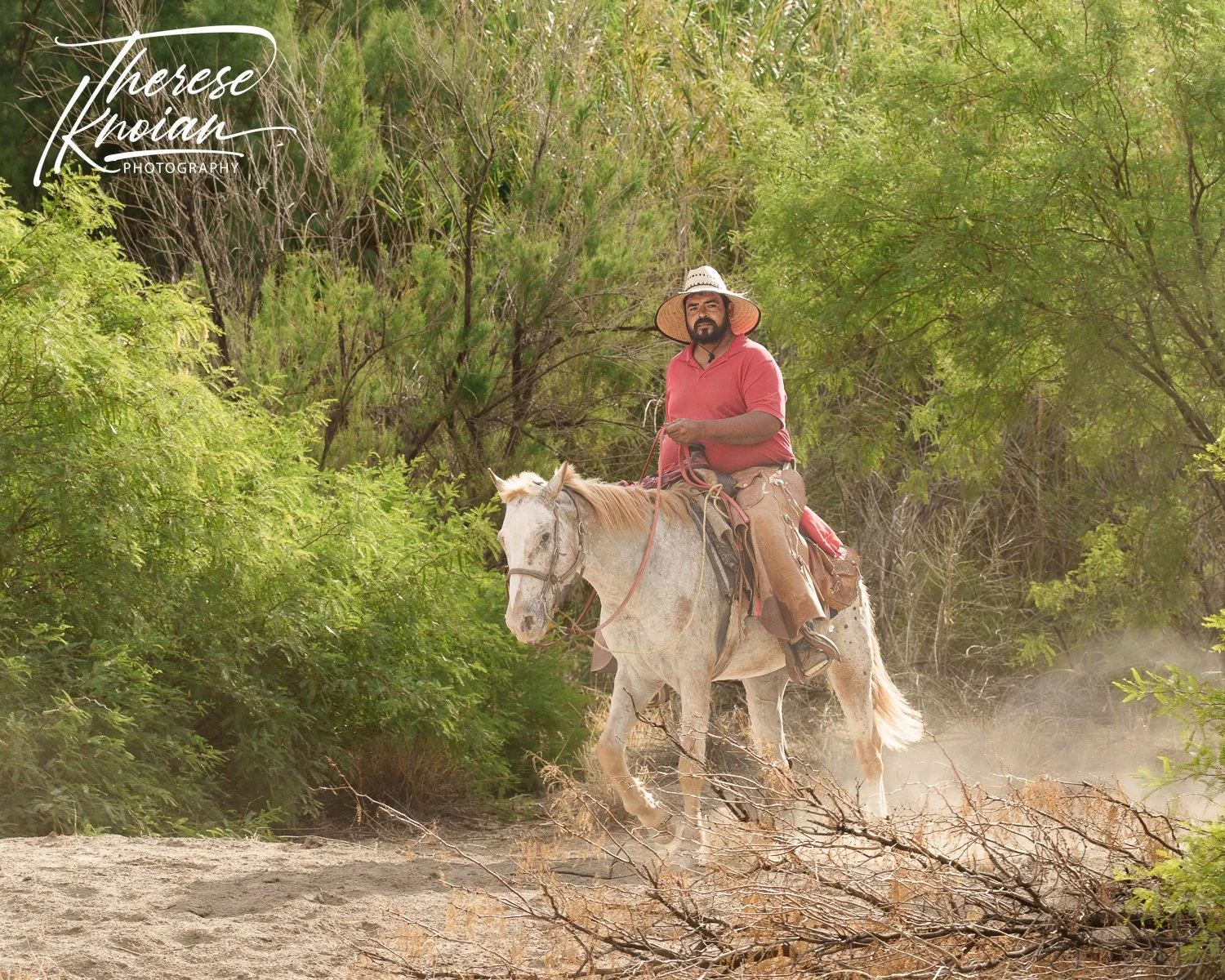
There is also the classic Mule Ears formation. You can go to the overlook named for it or take it in from other viewpoints, including from Terlingua if it’s not too hazy.
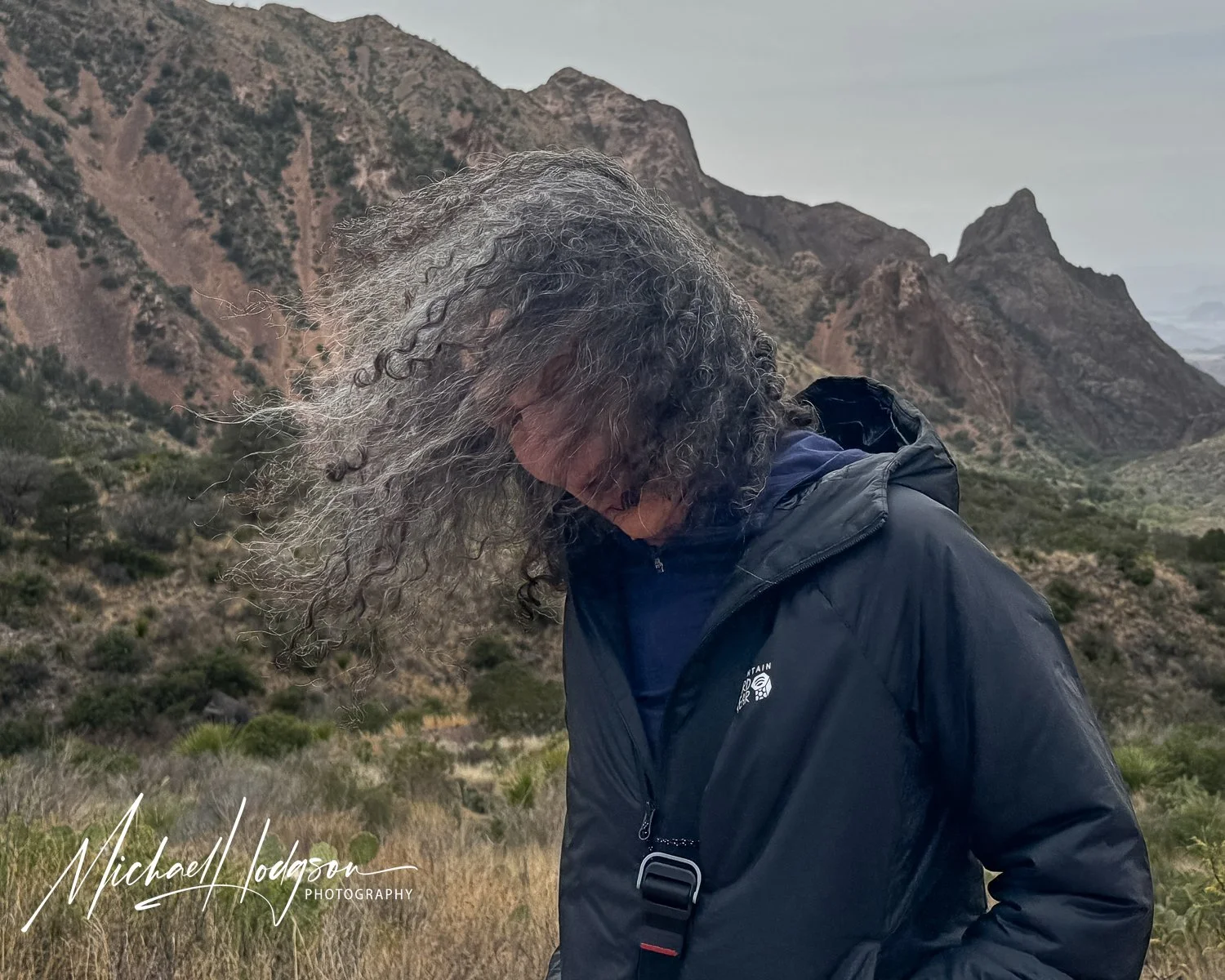
Chisos Basin is, of course, the crown jewel of the park. It had been slated to close in May 2026, but with national park funds being cut, it will remain open for now. Don’t miss it, especially in the summer, when temperatures at its 5,400 feet offer relief from the heat. Unfortunately for us, as previously mentioned, the weather turned biting and theatrical. It was cold, and the wind was so strong it nearly blew Therese over as she struggled to walk a straight line. Not to mention the dust and grit filling the air. Birds and other wildlife do not love wind. But Big Bend Park seemed entirely pleased with itself for showing us a wide breadth of weather.
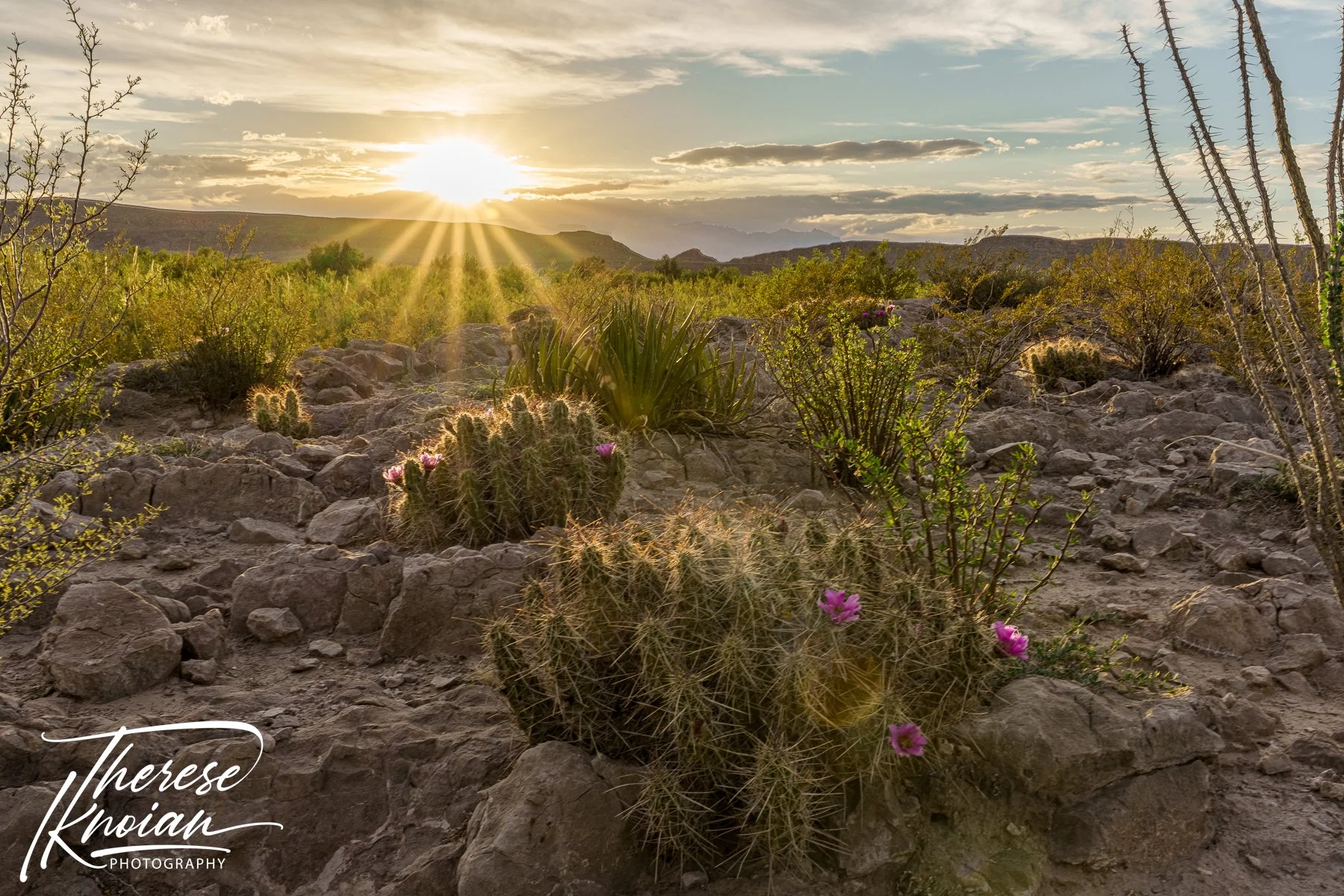
Even when the weather didn't fully cooperate, the landscape kept giving us reasons to stay out longer and go farther. The desert at sunset is persuasive. Shadows stretch. Rock warms. Harshness softens. Cactus spines are bathed in golden light. You forget how tired you are until you sit down.
Remember what we said about making peace with yourself since you simply won’t get everywhere? Do it before you go. We haven’t even mentioned sights like Homer Wilson Ranch, an outing to Boquillas in Mexico, kayaking the river, hiking the Santa Elena Canyon Trail (take sandals for the river crossing), Balanced Rock, and so many unnamed vistas that take your breath away.
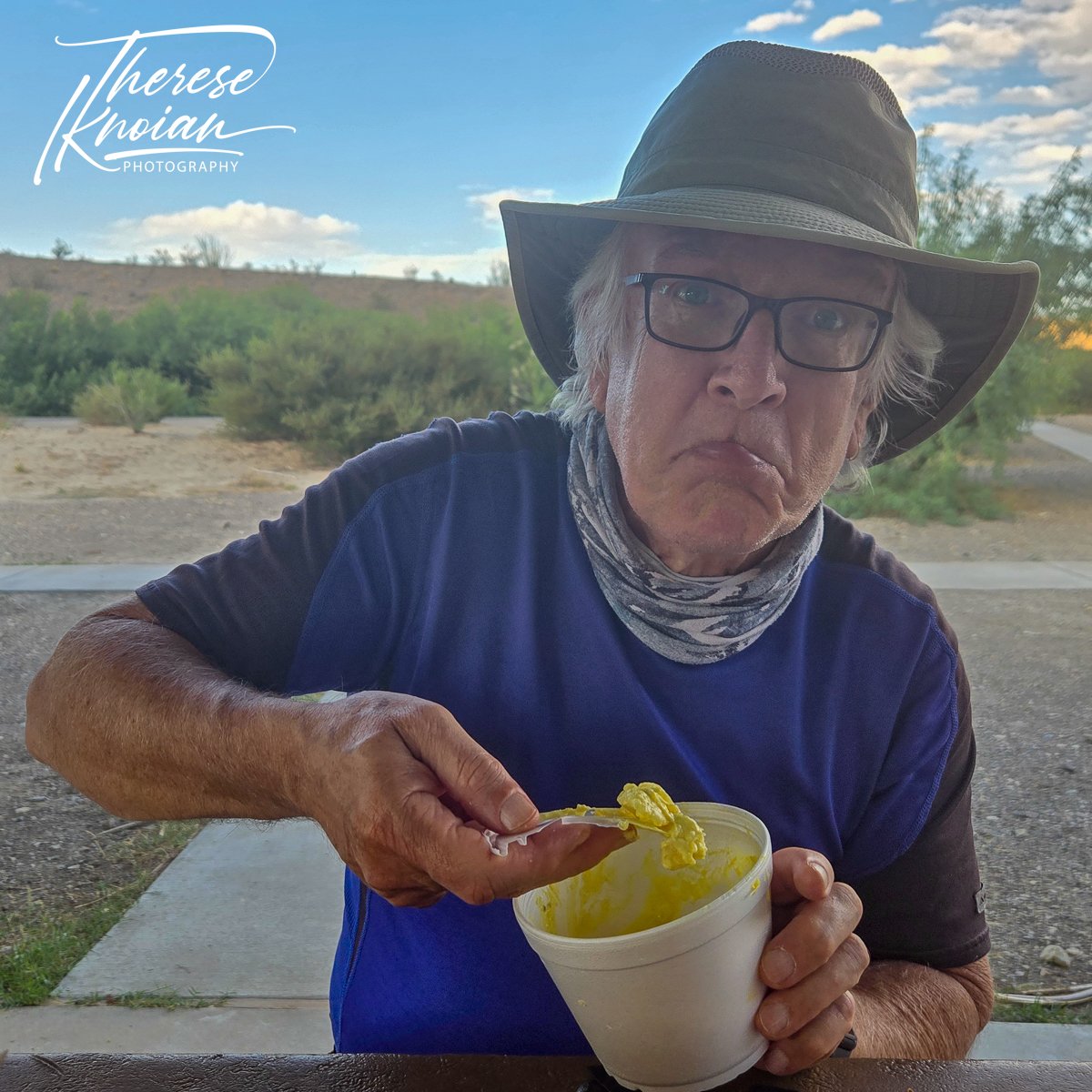
With the long drives and lack of places to eat, you will need not only a cooler for supplies but also the appropriate eating utensils. We gallantly planned a sunset picnic before a night shoot after a long day, but we forgot utensils. Mixed green salads and potato salads aren’t finger food. We finally tore a coffee cup lid in half and scooped with a flimsy piece of plastic to spare our fingers. We laughed at ourselves because there was nothing else to do. Out there, surrounded by towering canyon walls, it felt less like a mistake and more like a proper desert meal.
On our last night’s shoot, high on a bluff overlooking the Rio Grande floodplain, coyotes began to howl as the sun headed toward the horizon, their calls echoing around us in the desert. It was eerie and magnificent. We were also rewarded with a view of the park’s iconic Mule Ears rock formation at sunset, a reminder that photos of great vistas don’t just happen at the designated vista points.
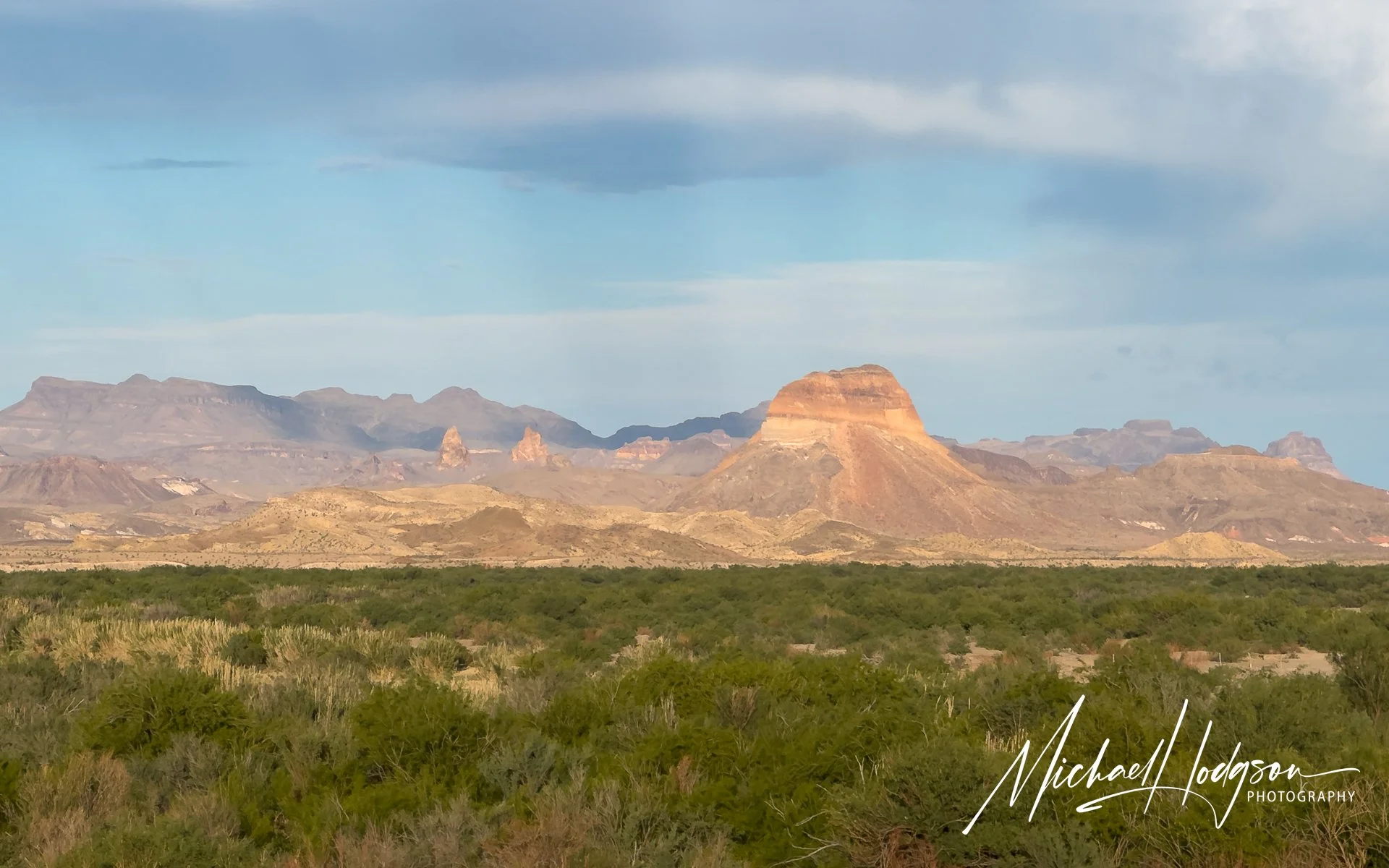
View of Mule Ears at sunset from Dorgan-Sublett.
Time to leave behind the Big Bend adventure?
Despite being tested by difficult weather, birds playing peek-a-boo, and night skies hiding behind clouds, we fell in love with the park and its rough ways more than we expected.
Travel and the photography that goes with it are often presented as a collection of perfect moments: canyons glowing at sunset, a pristine Milky Way arching across the sky, wildlife appearing right on schedule, and smiling travelers pursing their lips for another joyful selfie. That is not always what happens. And it’s the less-than-perfect moments you will always remember and treasure. You learn, again, that weather does not cooperate, wildlife does not take direction, and the best photographs often come from staying open to whatever the desert decides to give.
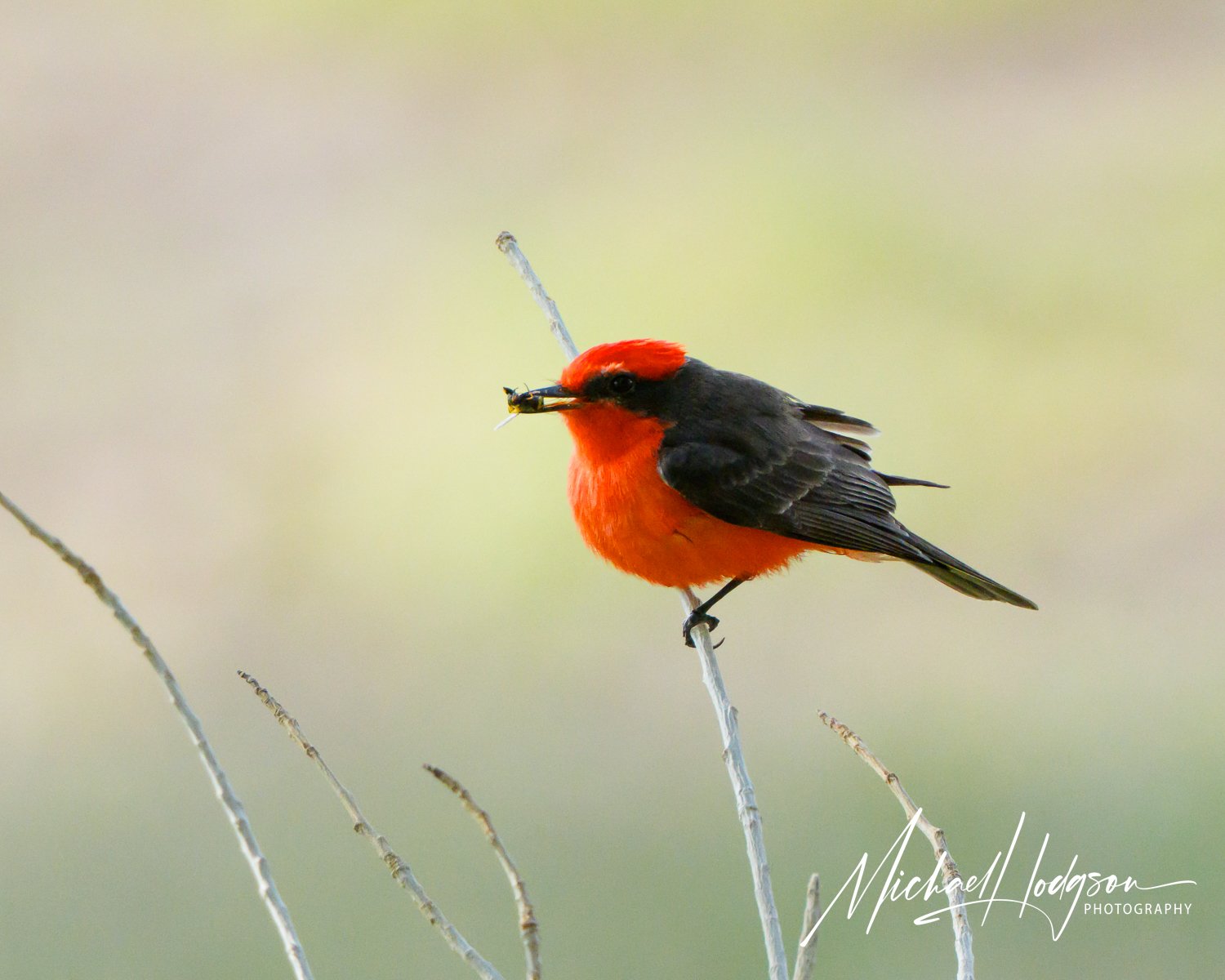
Big Bend does not make itself easy, but it will find a place in your heart and soul.
That is why we want to go back … after a long nap.