Visiting Mauthausen Concentration Camp: A Powerful Journey Through Holocaust History
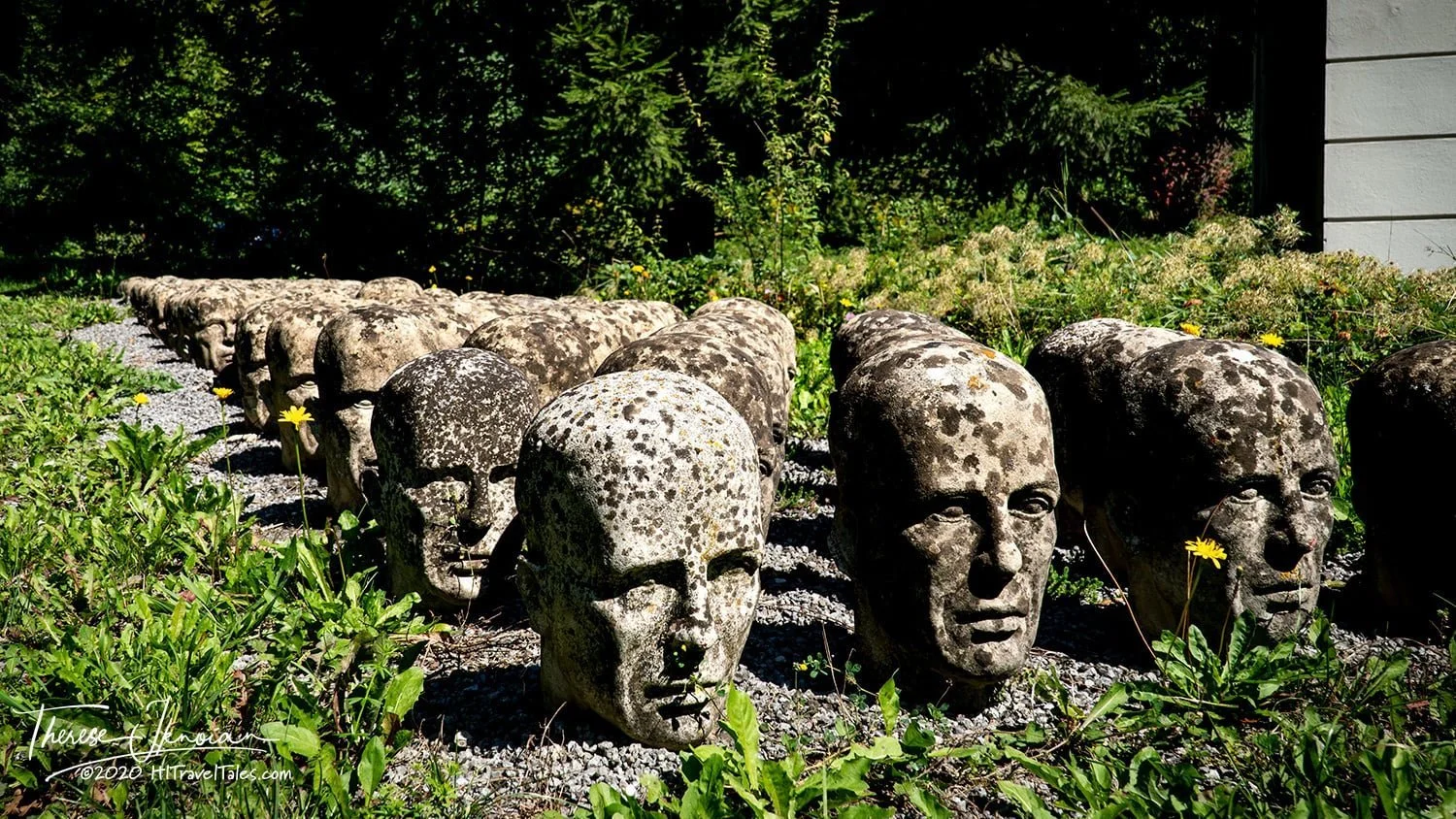
A visit to Mauthausen Concentration Camp Memorial in Austria is a sobering reminder of the horrors of the Holocaust and the enduring importance of remembrance, education, and honoring those who suffered and died during Nazi persecution.
When it comes to concentration camps run by the Nazis, Mauthausen concentration camp in Austria is typically not the first one people think of. But Mauthausen camp was a camp with some of the harshest imprisonment standards and some of the highest mortality rates.
Mauthausen was built within weeks of the Nazi annexation of Austria in March 1938 in an idyllic setting near the Danube River, about 15 miles southeast of Linz. It wasn’t until the war began, however, that it was transformed into a truly evil place remembered for its violence and harsh treatment of prisoners. The concentration camp housed “undesirables” – men and women -- from many countries, including nearly every German-occupied country as well as Allied Forces prisoners. Toward the end of the war, prisoners from other camps also arrived by the train full, adding to Mauthausen concentration camp’s legacy of hunger, death and disease. Many prisoners were in fact transported to Mauthausen and then killed without ever being registered as a camp prisoner.
Among the millions who died in the network of Nazi concentration camps across Europe, an estimated 90,000 died in Mauthausen – or nearly half of all its prisoners. That is in fact nearly triple the number that died in Dachau, outside Munich, Germany, which is often the camp travelers go to for a history lesson.
Visiting Mauthausen Concentration Camp
We completed a two-week bike trip along the Danube River a few years ago, starting in Regensburg, Germany, and ending in Budapest, Hungary. On Day 5, a visit to Mauthausen was on the agenda after we had departed Linz. It was actually a long, hot, hard climb up the hill from the Danube to the Mauthausen camp. Prisoners were forced to march right through town and up the hill when they arrived.
A visit to any of the thousands of former concentration camps open as sites of remembrance is of course a sobering experience. Mauthausen camp however was chilling. It was not our first visit to a concentration camp or site of Nazi terror, having been to Dachau. A bike trip is full of joy at seeing villages and landscape, visiting small towns, and talking to locals as you glide past scenery. If you are going to fully appreciate history, how it repeats itself, and internalize the “never forget” motto, then a visit to Mauthausen concentration camp is still a must. A day trip from Vienna, about 2-2 1/2 hours to the west, is also possible.
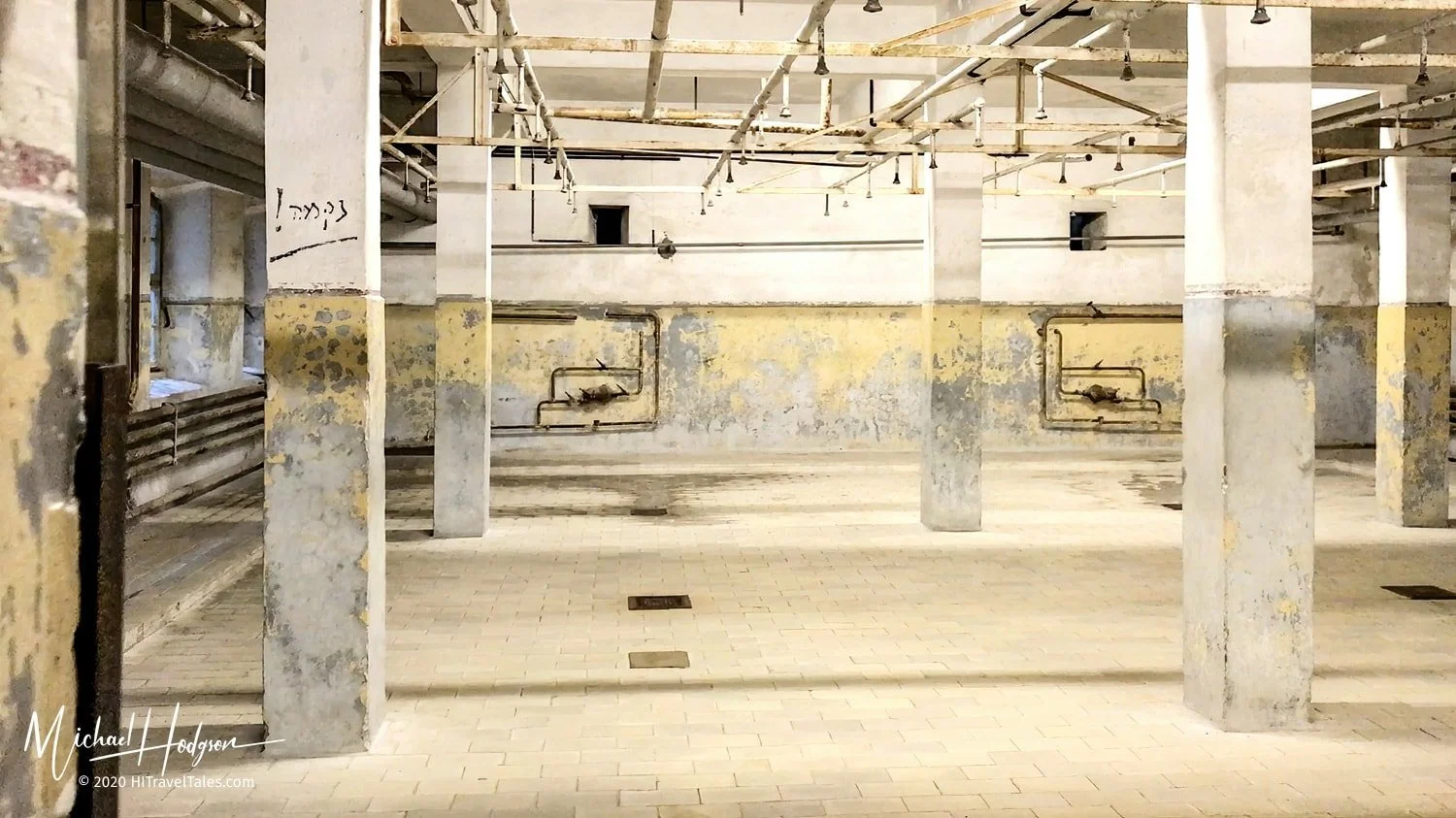
A room in the crematoria and gas chamber area at the Mauthausen Memorial.
We spent about two hours there, in part because you move so slowly and have to stop and think about the people and the torture as you walk through former barracks, visit rooms of memorials, and take a look at the grounds and cemetery. (See an overhead map to take a virtual tour here). We found ourselves staring down into a quarry and at the Stairs of Death, where prisoners were forced to carry stones that weighed more than they did up the stairs. Many collapsed along the way. Those that didn’t make it were often forced to make a choice on the so-called Parachutists Wall of pushing the prisoner in front of them off the cliff or being shot. Many committed suicide rather than face continued terror.
We heard stories of prisoners who were forced at gunpoint to run into electrified fences, left to scream in pain until they died. The bodies remained hanging on the fence for other prisoners to see. Guards at many camps of course adopted inhumane behavior, but at Mauthausen, horrific treatment and suffering seemed to be something guards really enjoyed.
Today, there are educational services and tours, with archives and a library maintained in Vienna. As with other Holocaust remembrance sites, there is no charge to visit the Mauthausen Concentration Camp, although additional tours, guides and audio tours carry a small fee. Particularly moving is the Memorial Room of Names, an angular and partly darkened room with the names of more than 81,000 prisoners who died at Mauthausen, its sub-camp, Gusen, or other sub-camps. Over the years, countries have added their own memorials on the grounds to their citizens who lost their lives as prisoners, including Britain, Bulgaria, Yugoslavia and Belgium
We left after our tour, continuing our ride in silence for several hours, left to mull how humans can treat each other in this way. Never forget.