
Packing for a safari in Africa: essential items you’ll be glad you brought
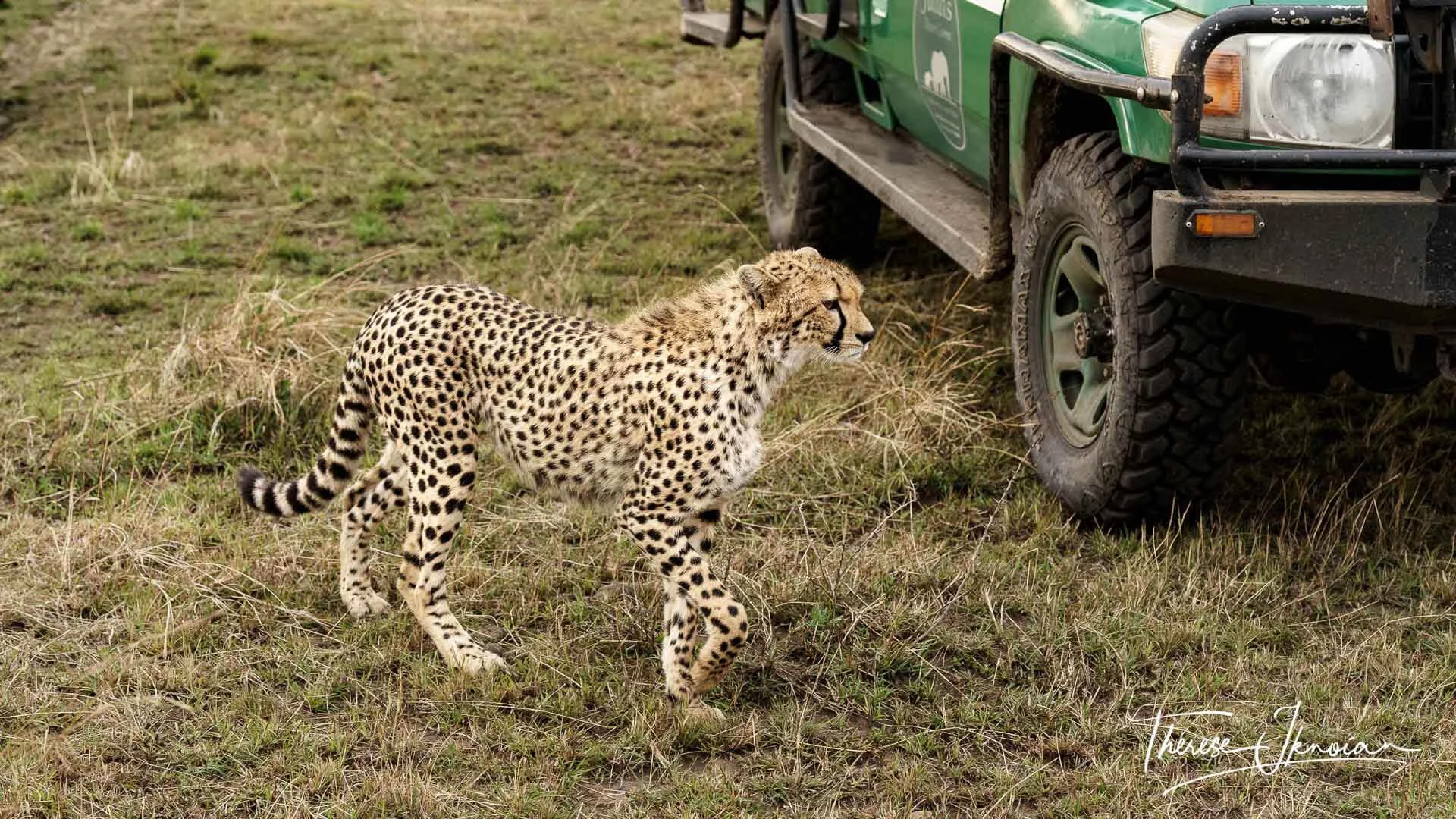
Preparing for an African safari starts long before you reach camp. From layers for hot and cold, sun and bug protection, to smart footwear, gadgets, and bags, this expert safari packing list highlights easy-to-forget items to keep you comfortable, organized, and ready for long game drives, camp life, and unpredictable weather.
With a bucket list trip like an African safari, you don’t want to mess up the experience by not bringing things you might need since there aren’t stores around every corner in the parks. That makes figuring out in advance what not to forget when packing for a safari an essential part of the planning process.
Thinking about packing for game drives in a jeep, a sunrise balloon ride, staying comfortable in camps, and being prepared for fickle weather means making many decisions about what to pack for this new, life-changing African safari experience.
For my first African safari (a photo safari in Kenya and Michael's second visit to Kenya), we were well-equipped, yet we discovered a few items that would have been helpful or added to our comfort. We're sharing these safari packing tips so you won’t forget them when packing for your own African safari!
Mind you, this list is not an all-inclusive packing list for a safari; instead, this safari packing list is filled with tips about specific items that we or others on our photo safari would have found – or did find -- very helpful. If you have anything to add or ask, let us know!
Packing for a safari in Africa - Accessories
Water bottle to refill – Plastic is verboten in many African countries and who wants to create more waste anyway? Bring your own.
Small flashlight or headlamp – We experienced a power outage in one camp so being ready is not a bad idea. And sometimes you need to maneuver dark paths or walkways to get between a tent or cabin to a dining area or to or from a jeep before sunrise or after sunset.
Power pack – just a small one to keep your smartphone happy.
USB charging cable and plug adapter – to keep a phone or other device charged in a jeep during a game drive.
Stuffable pack or duffel – These stuffable bags take up little space but are indispensable on an African safari for schlepping around extra clothing or gear.
Waterproof bags – Permanent, reusable baggies such as those from Loksak or similar brands can protect gear and devices in rainy or dusty weather and are great for packing toiletries in non-disposable plastic baggies. Or consider smaller, roll-top dry bags for gear protection or nylon stuff sacks, especially if you have cameras. It can be so dusty that a cloth or bandana just won’t do the trick.
HITT Tip: Although many African countries, including Kenya, have prohibited single-use plastic bags and banned travelers from bringing them into the country, nobody searched our bags at the airport when we arrived. So do your part to eliminate waste, if possible, by using reusable plastic baggies like the ones above, but don’t freak out. Yes, I had some toiletries double-wrapped in plastic wrap, as usual, to prevent leakage. If you do decide to use plastic bags, remember that, since it is illegal, you could face severe fines if you get caught. And just make sure you take ANY plastic you brought into the country back out with you when you leave.
Personal care items for your packing list
Sunscreen – Copious amounts of sunscreen and sunprotective clothing are something you do not want to forget for an African safari.
Bug repellent – Mosquitos and the disease they carry are a constant threat. Some citronella-infused wrist bands can also work reasonably well in the short term. But your best bet is a repellent called Picaridin. Do NOT use DEET-based repellents as these can melt plastic, including camera parts.
Immunity drinks and vitamins – You will be spending a lot of time in a group and likely not getting a lot of sleep, so boosting your immune system won’t hurt. Try drinks such as Emergen-C or Resistance C, our recent favorite.
Earplugs – If you might be sensitive to the sounds of hippos at night or neighbors in a nearby tent, then sleep accessories are a must to pack for your safari.
Anti-itch sticks or lotions – If you do get a mosquito bite, you won’t want to just itch yourself to death.
Apparel packing tips for a safari
Warm clothing -- Yes, it gets chilly in Africa, believe it! A fleece or light-insulated jacket, gloves, a knit cap or fleece headband, and a light wool neck bandana for cool mornings are necessary. Although our safari was in August, we still had a couple of cool days in the Maasai Mara, especially on pre-dawn departures.
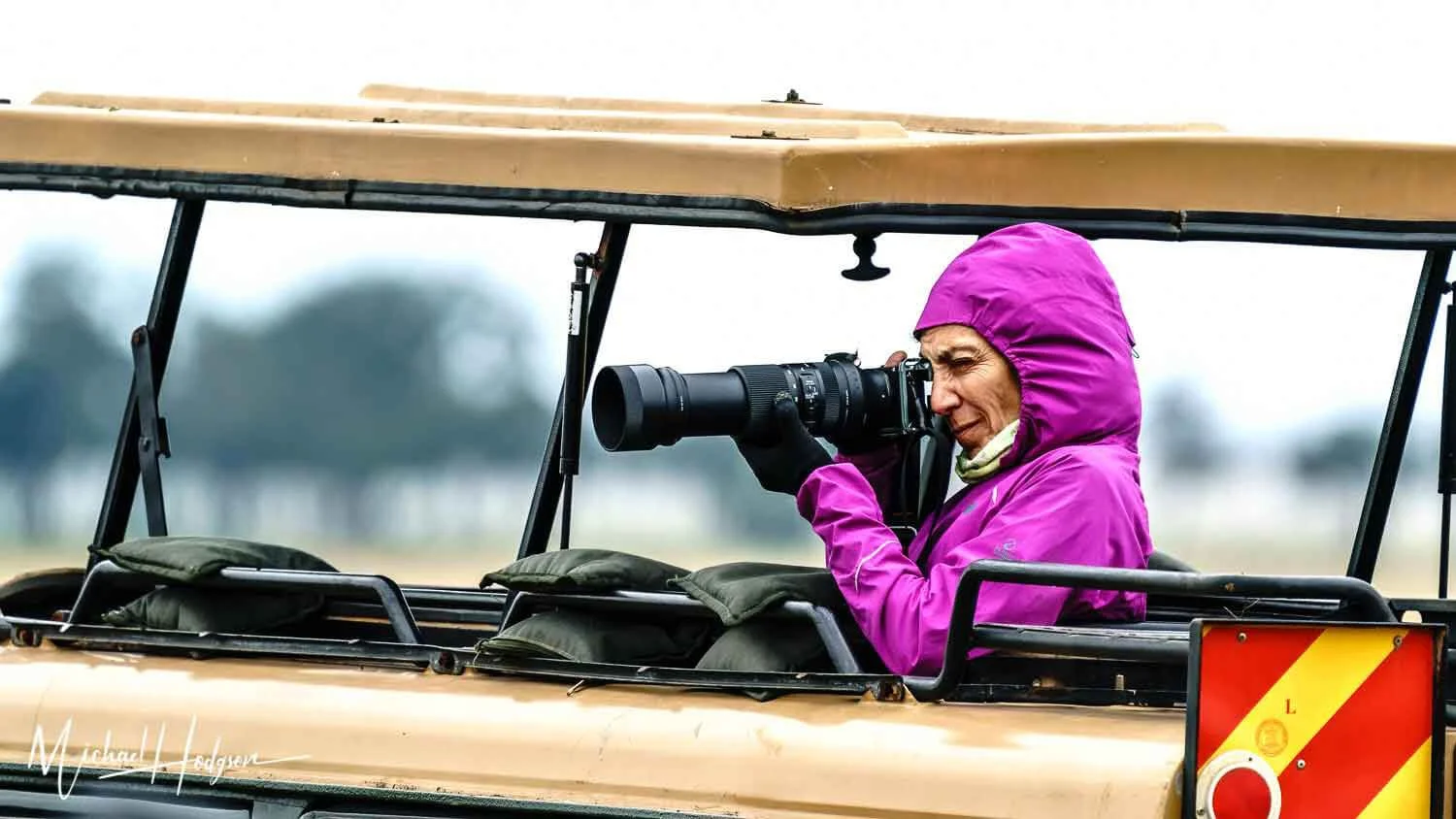
Yes, Therese was happy she had gloves and neck scarves for a couple of quite chilly, drizzly days on our photo safari in Kenya.
Heat packs – If you have a problem with cold hands like I do, then a set of rechargeable heat packs or compostable oxygen-powered heat packs are small and easy to pack for a safari. Yes, I used mine!
HITT Tip: Worried about being cold in tents? Don’t be. Many camps slip hot water bottles into the beds in the evening while you are at dinner. The first time we returned and saw lumps under the covers, we thought we needed to run for it. When I found it was a hot water bottle, I quickly stole Michael’s, too, and luxuriated in the warmth!!!
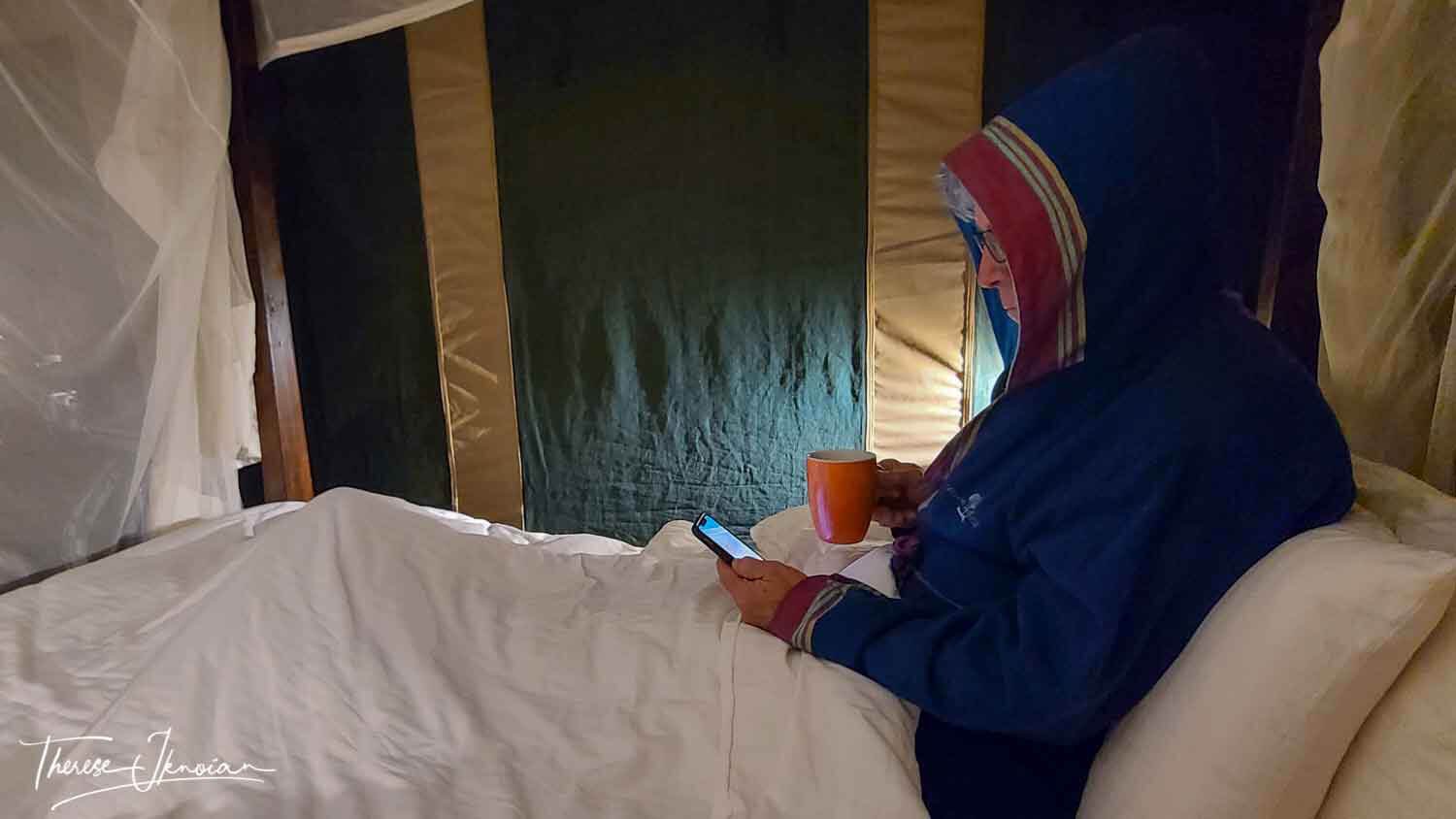
Michael had to work to stay warm a couple of nights after Therese stole both hot water bottles that had been slipped into our bed!
Rain shell – You may not need this on your African safari, but better safe than sorry. We did have a couple of days of rain and were grateful we both had lightweight shells in our suitcases even though we were told not to bother. Plus, it can serve as wind protection on cool days or evenings.
Hot weather clothing – Yes, what not to forget for an African safari includes items for both cold and hot weather if you are making the rounds of numerous national parks. For the northern Samburu region, it was quite hot, mandating tees, brimmed hats or visors, and lighter clothing.
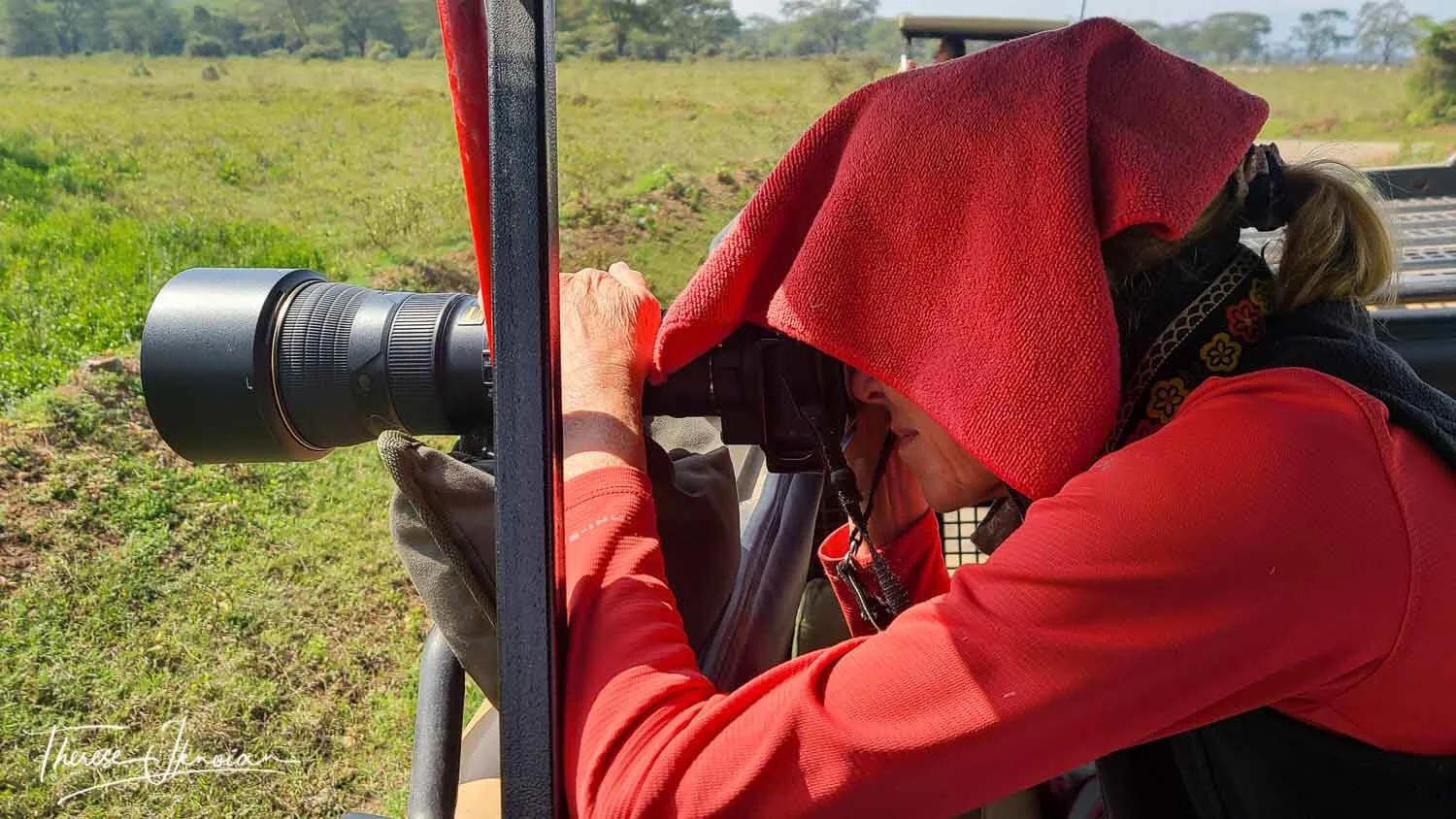
No sun visor on a hot day? No problem. Improvise with a cloth to block glare from your eyes.
HITT Tip: Make sure ALL your clothing is layerable to help in packing for your African Safari. There were a couple of cool days that I literally wore four or five layers, which I could wear separately or strip off as it warmed up.
Sun sleeves – Consider packing sun sleeves so you can make a short-sleeve shirt more sun protective on warm days on a safari – or cover your arms on a cool morning and then easily slip them off.
Microfiber tube scarves such as Buffs – multi-purpose neck protection, head covering, or headband. Or face protection on a dusty drive.
Swimsuit – Yup, a swimsuit, since it's one thing you'll absolutely want to put in your luggage when packing for a safari in Africa, as many bush camps have pools.
Insect-repellent clothing – If you’d rather avoid applying chemicals to your skin, then take a look at adding mosquito- and insect-repellent clothing to your safari packing list.
Footwear to add to your safari packing list
Washable slip-on plastic footwear – This may sound weird as something not to forget to pack for a safari, but you spend your days in a jeep, sometimes in dusty or even muddy areas. Plus, you will be standing on the seats. No real walking is involved on game drives. So if you have something you can slip in and out of that can accommodate socks for cool mornings, life is a lot easier. Plus, if it’s plastic or rubber, and you slog through some mud, it's easy to rinse off. If you don’t mind bare feet in cool weather, flip-flops could work, but that wouldn’t be my personal choice since they don’t accommodate socks. Forget boots or hiking shoes. You won’t be walking enough to need them.
Running shoes or tennies – Another comfort option for times you may be walking a bit more. I used mine to enjoy a walking loop in one camp for a little exercise.
Camp shoes – You may want to dump your safari shoes and step into a pair of light, comfy, slip-ons for heading to a meal or hanging around your tent. I love my Vibram Furoshiki shoes for travel.
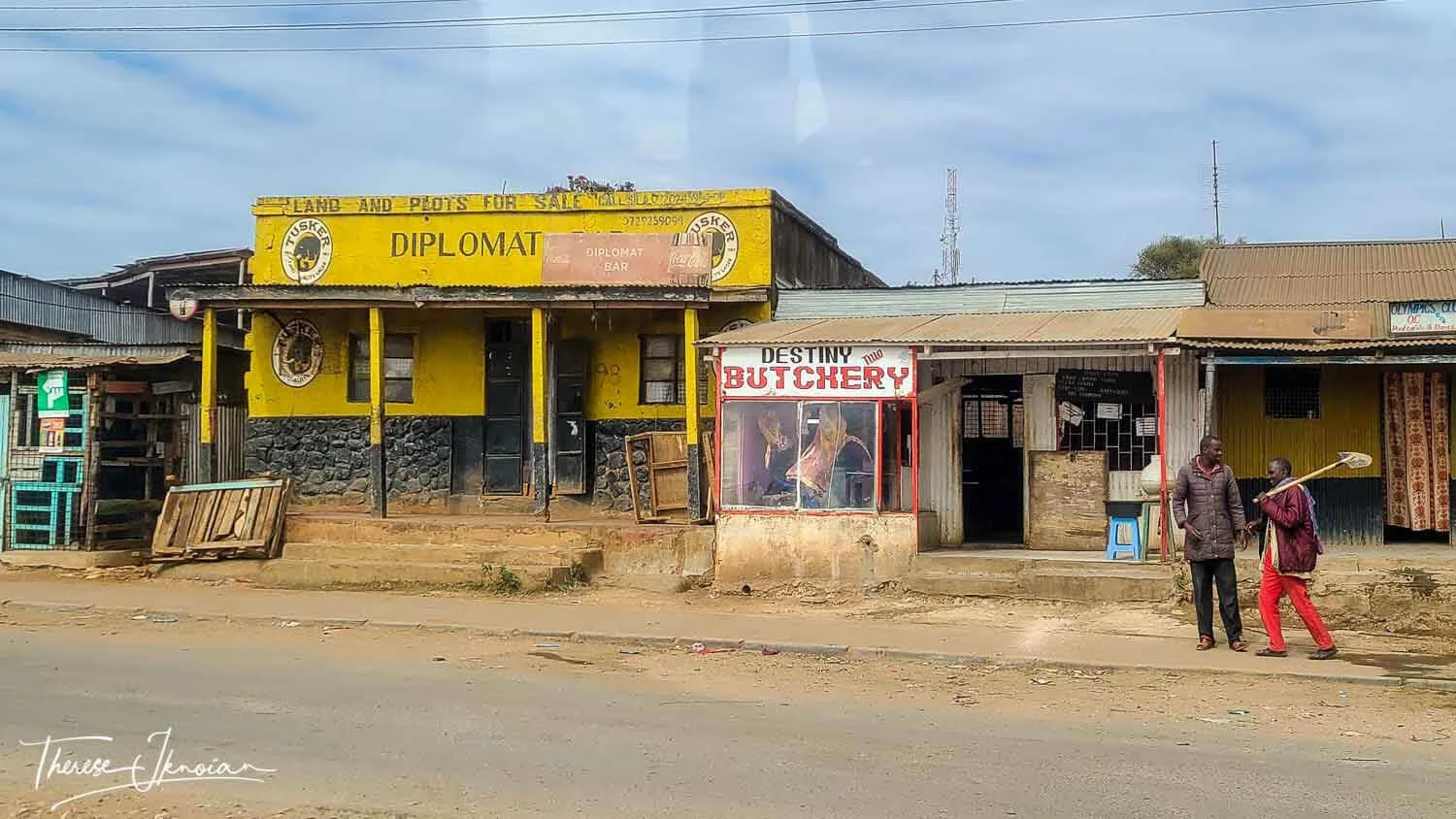
Most writing and signs were in English, but communication with many locals, who do not speak fluent English, was in Swahili.
Logging and learning is part of packing for a safari in Africa
Notebook or logbook and writing utensils – I found it helpful during a game drive to jot down the names of animals and birds seen so I’d know later what I had photographed. Plus, drivers are usually great at offering information, and you may want to take a few notes. With the jostling around in a jeep, electronic note-taking can be difficult, so consider adding old-school paper and pen to your safari packing list.
Basic Swahili guide – Never hurts to learn a few words of Swahili. I had a couple of PDFs I’d downloaded prior to refer to along the way. Or try your hand at a little language learning in advance with a language guide. A few words come in very handy, and a language guide or two is definitely something to add to your African safari packing list.